After go-live, with the implementation team and steering committee having stepped away, governance comes into focus. Depending on an enterprise’s preparedness, it’s often the quality and depth of this governance that most influences the trajectory of an AI implementation.
When Deloitte surveyed 3,235 IT and business leaders across 24 countries, it found about 80% of them lack mature governance capability for agentic AI. These capabilities typically include real-time monitoring that flags anomalous agent behavior, and audit trails for the full chain of agent actions.
If inadequate governance is the ailment, AI spend control is one of the leading symptoms. But spend is only the most visible of them. In this blog post, we highlight four areas of concern that often go underserved during implementation.

Models change and re-testing rarely follows
In many enterprise AI deployments, the model behind the AI belongs to a third party. What happens when that model gets upgraded or swapped? The acceptance testing signed off during go-live loses relevance. Re-testing against the new model requires planning and resources that weren’t sufficiently accounted for.
Researchers revisited 85 studies from 2024 that used commercial large language models (LLMs) and attempted to rerun them. Five had artifacts complete enough to execute, and none of the five fully reproduced. In at least four other cases, the model the work depended on had been retired altogether.
Nubank, the Brazilian digital bank, employs customer support agents to serve a base of more than 100 million customers. Its engineering team published what happened when they moved those agents onto a newer model. In short, the newer model followed instructions more strictly and stopped calling contextual tools before answering (unless it was told to). Prompts had to be reworked before the upgrade beat what it replaced.
Takeaway: As AI models move, evolve, and are replaced by newer versions, someone has to take ownership of revalidation.

The all-important knowledge base lacks ownership
More than likely, a contact center AI implementation has a retrieval layer that’s fed knowledge articles, policy documents, and other common knowledge base material. Whereas that knowledge corpus received attention during the launch timeline, it may have stagnated since.
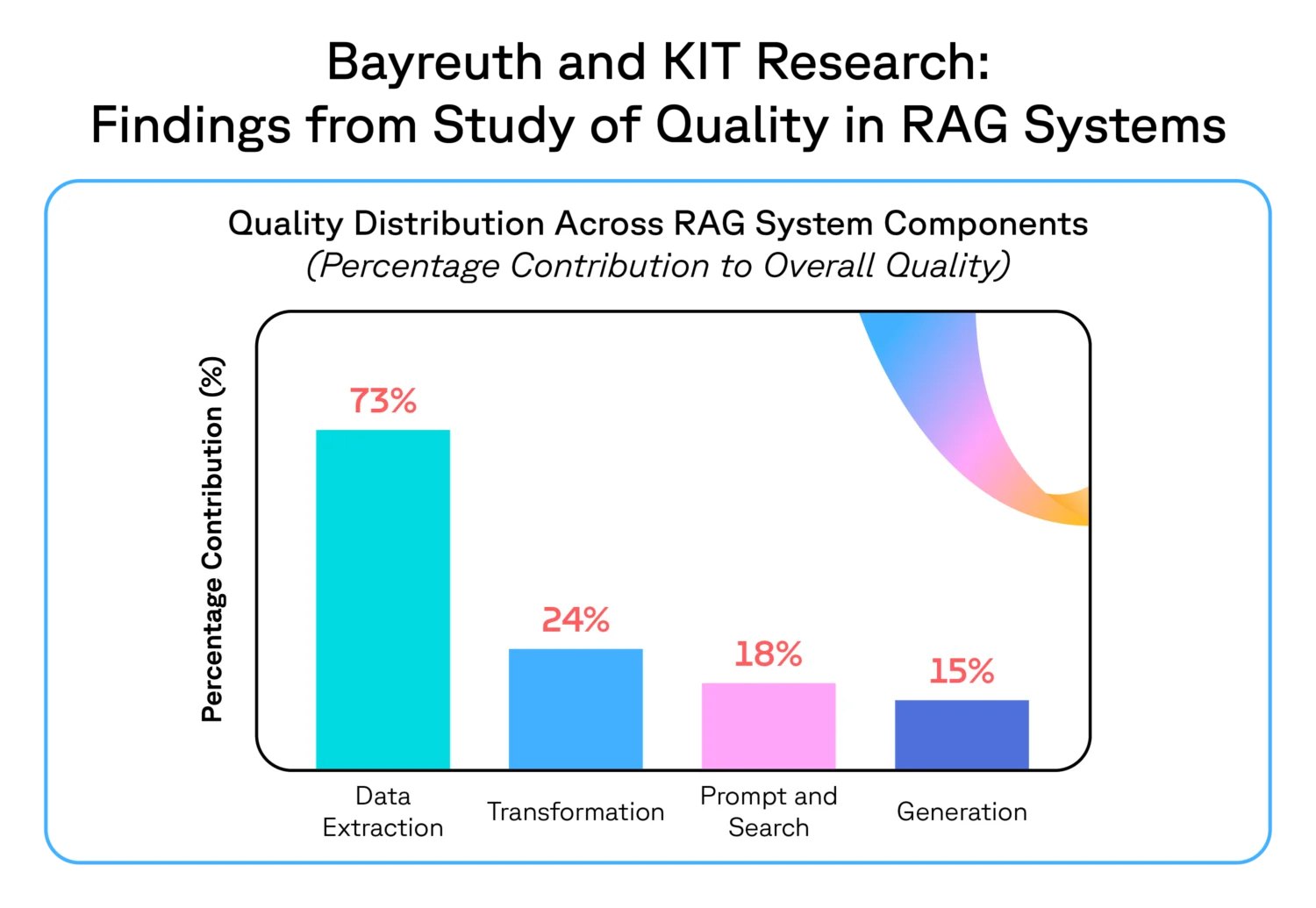
Researchers at Bayreuth and KIT interviewed 16 practitioners at two of the world’s largest IT services companies. They asked about where quality problems live in retrieval-augmented systems. Through these interviews, the researchers mapped 15 quality dimensions across the four processing stages. They found that the trouble concentrated at the front end.
Data extraction alone accounted for 73 coded challenges, against 15-24 at each downstream stage. The research strongly suggests that what goes wrong at the extraction stage tends to affect everything built in connection to it. Gartner put the problem into unmistakable numbers: they expect organizations to walk away from 60% of AI projects that lack AI-ready data by the end of 2026.
Takeaway: The contact center often holds more usable knowledge about the customer than almost any other function in the business. Someone has to own the maintenance and comprehensiveness of an AI implementation for it to sustain success.

Compliance takes on new meaning
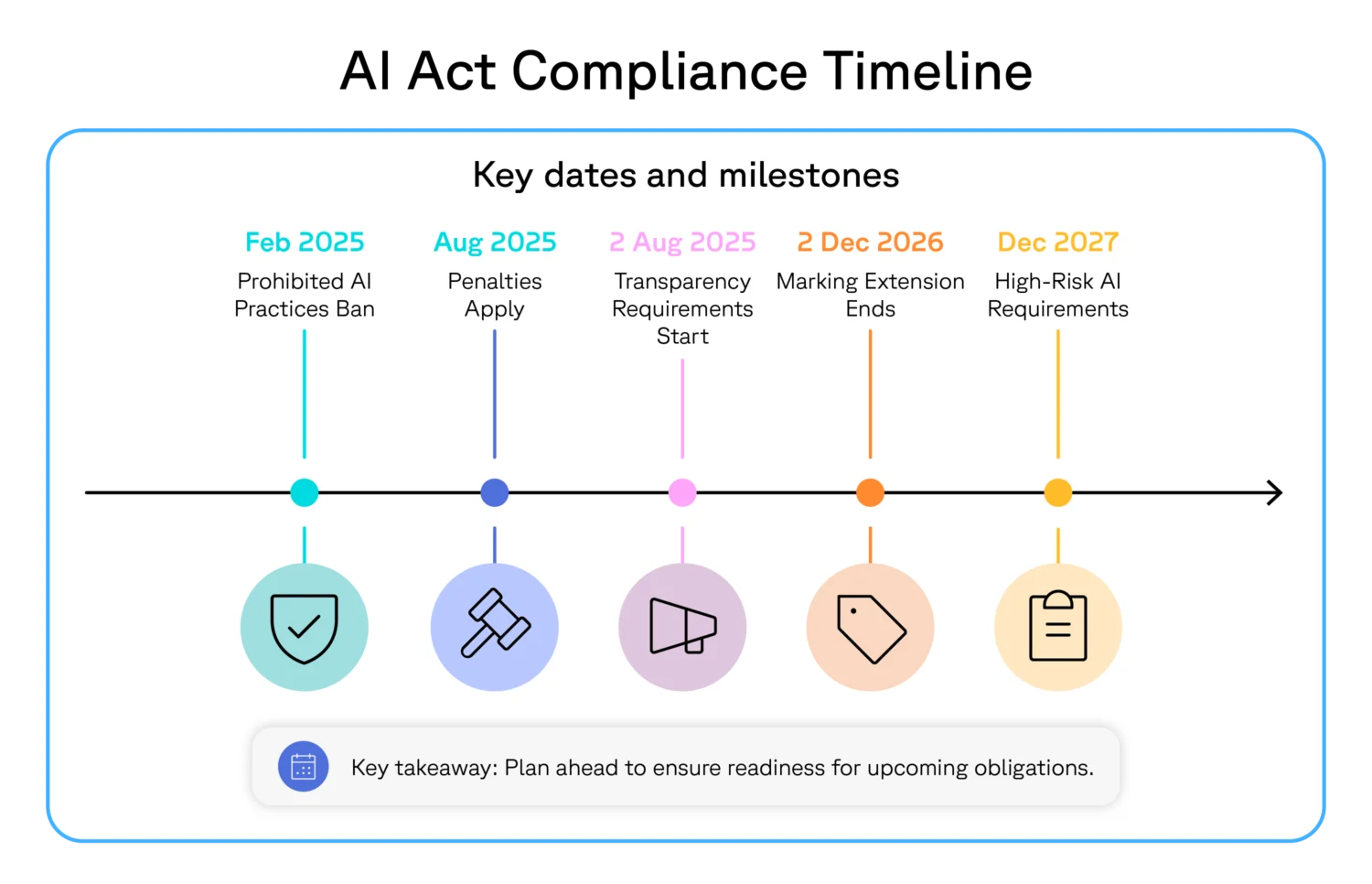
On August 2, 2026, the transparency obligations in Article 50 of the EU AI Act took effect. The Commission’s language is that users must be clearly informed when they’re not interacting with a real person, and it names chatbots and AI agents among the systems covered. Penalties for non-compliance can reach 15 million euros or 3% of global annual turnover.
New guidelines published on 20 July 2026 lay out how users should be informed. Notice has to be clear, distinguishable, and delivered no later than the first interaction.
There is no general grace period. Providers of generative systems already on the market before August 2 have until December 2, 2026 to meet the marking obligation, an extension granted under the AI Omnibus. It covers only the machine-readable marking of AI-generated content.
Article 5 goes further back, prohibiting AI systems that infer a person’s emotions in the workplace (with a narrow carve-out for medical or safety purposes). That has been law since February 2025, and the AI Office began enforcing the Act alongside national authorities in August 2026. The prohibition covers emotion inference applied to workers, which puts real-time sentiment analysis pointed at your own agents in the highest penalty band.
Takeaway: Compliance tends to be scoped as a gate to clear before launch. Article 26 requires deployers to retain logs and maintain competent human oversight for as long as the system runs. The regulations now require monitoring that organizations often lack.

Adoption may start to slip
An adoption dashboard that counts sessions may not indicate the day-to-day reality of agent adoption. The oft-cited field study of AI assistance in customer support followed 5,172 agents. Agents followed the AI’s recommendation 38% of the time. In other words, agents frequently ignore recommendations.
In a February 2026 Gallup survey of 23,717 US employees whose employers had made AI available but who were not using it, 46% said they preferred to keep working the way they already did; 26% found it unhelpful in their roles.
Read together, these findings paint a picture of human agents who ignore AI suggestions after weighing them against the customer in front of them and finding them wanting. That judgment can act like a continuous quality evaluation for a contact center, assuming there’s the wherewithal and systems in place to capture it.
Takeaway: Adoption numbers may tell a different story upon closer scrutiny. How often does an AI suggestion survive contact with a real customer?

Questions worth asking after go-live
Twelve months into an AI implementation, a service leader should be able to answer four questions:
- When did the underlying model last change, and who tested what changed?
- Who owns the content our AI answers from, and how frequently is it updated?
- What compliance obligations have arrived since go-live, and who owns responding to them?
- What share of AI suggestions do our agents use and which way is that number moving?
The extent to which they can do so is indicative of where things stand months or years after go-live. What many contact centers find is that more of the system’s behavior and performance is being taken on trust than anyone intended.