

80% +
of service organizations expect to reduce agent headcount in the next 18 months (Gartner)
Get forecasting, scheduling, intraday management, and adherence working from the same data.

Contact center workforces are changing. The agents who remain on staff are moving into higher-skill work, while AI investments still haven’t lifted experience metrics on their own. In that environment, forecasting precision, intraday flexibility, and skill-aware scheduling matter more than they used to.
Workforce management vs. workforce optimization
Workforce management is the staffing discipline: forecasting, scheduling, intraday, and adherence. Workforce optimization is the broader suite it sits within. We deliver WFM through Webex Workforce Optimization (Webex WFO), Cisco's suite, which also spans quality management and analytics.
We work primarily with Webex WEM and Webex Workforce Optimization (Webex WFO), Cisco's forecasting and workforce management suite. We support other enterprise WFM platforms where the environment calls for it. The goal is to keep planning, scheduling, intraday management, and adherence operating in the same loop, on the same data.
Volumes, handle times, shrinkage, and channel mix modeled together for voice, chat, email, and back-office work. Coverage plans reflect the work your customers are actually generating now, not last quarter’s voice patterns alone.
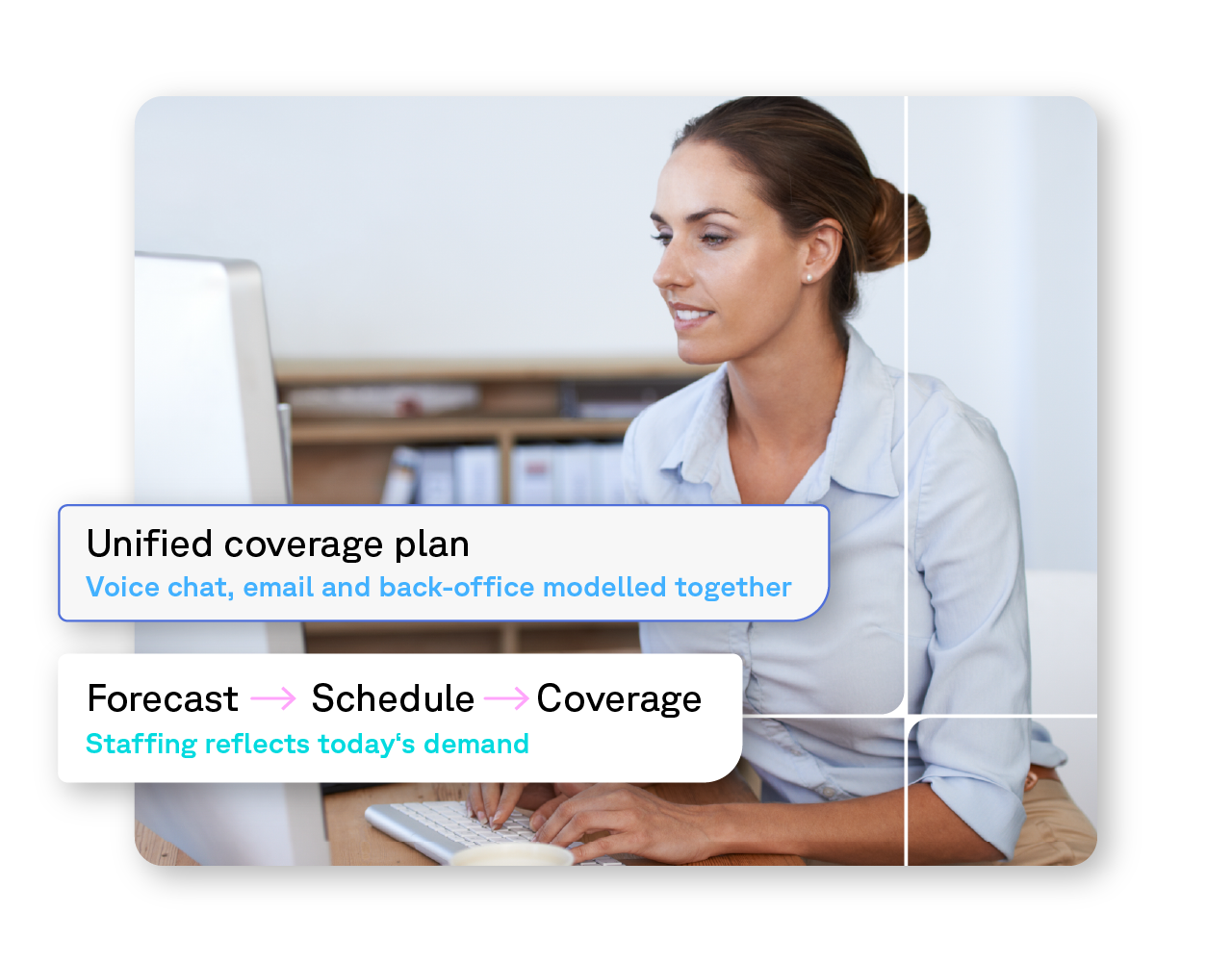
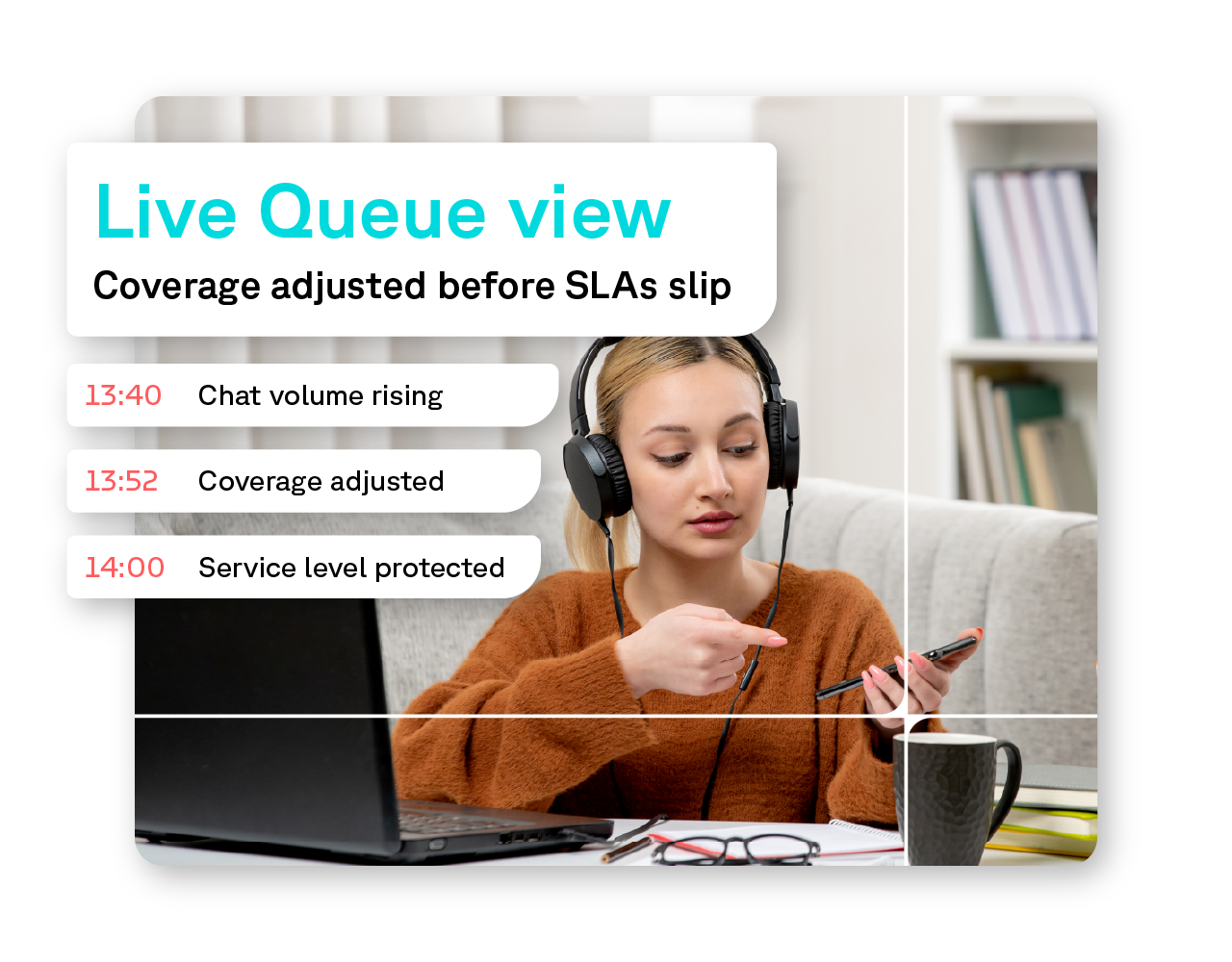
A live view of what’s happening across queues, with the ability to adjust before service levels are missed instead of after the report runs. When chat spikes at 2pm, your supervisors see it and reshape coverage in time.
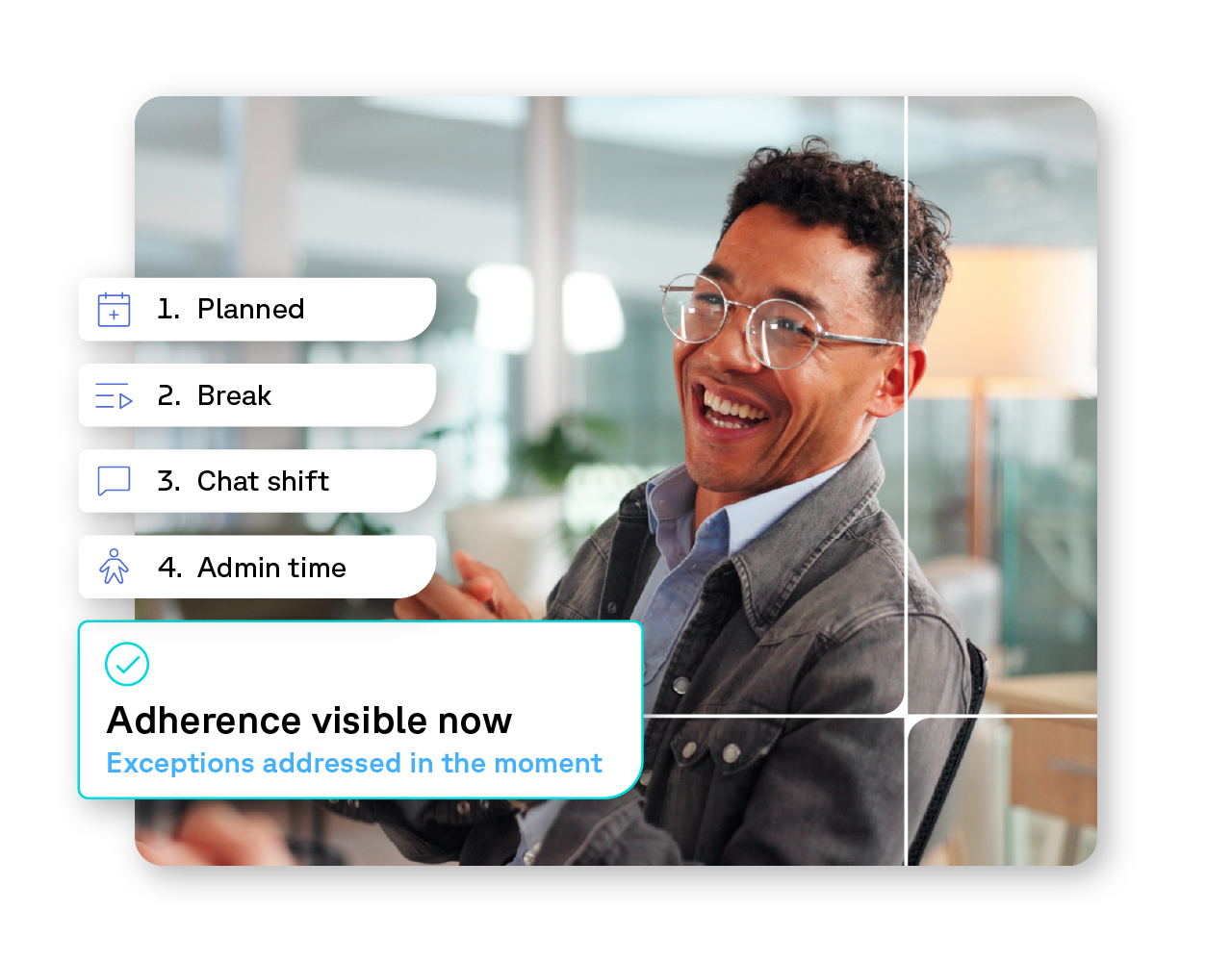
Adherence tracking that’s visible to supervisors and agents alike, so coaching conversations are grounded in what actually happened, and exceptions get addressed in the moment.
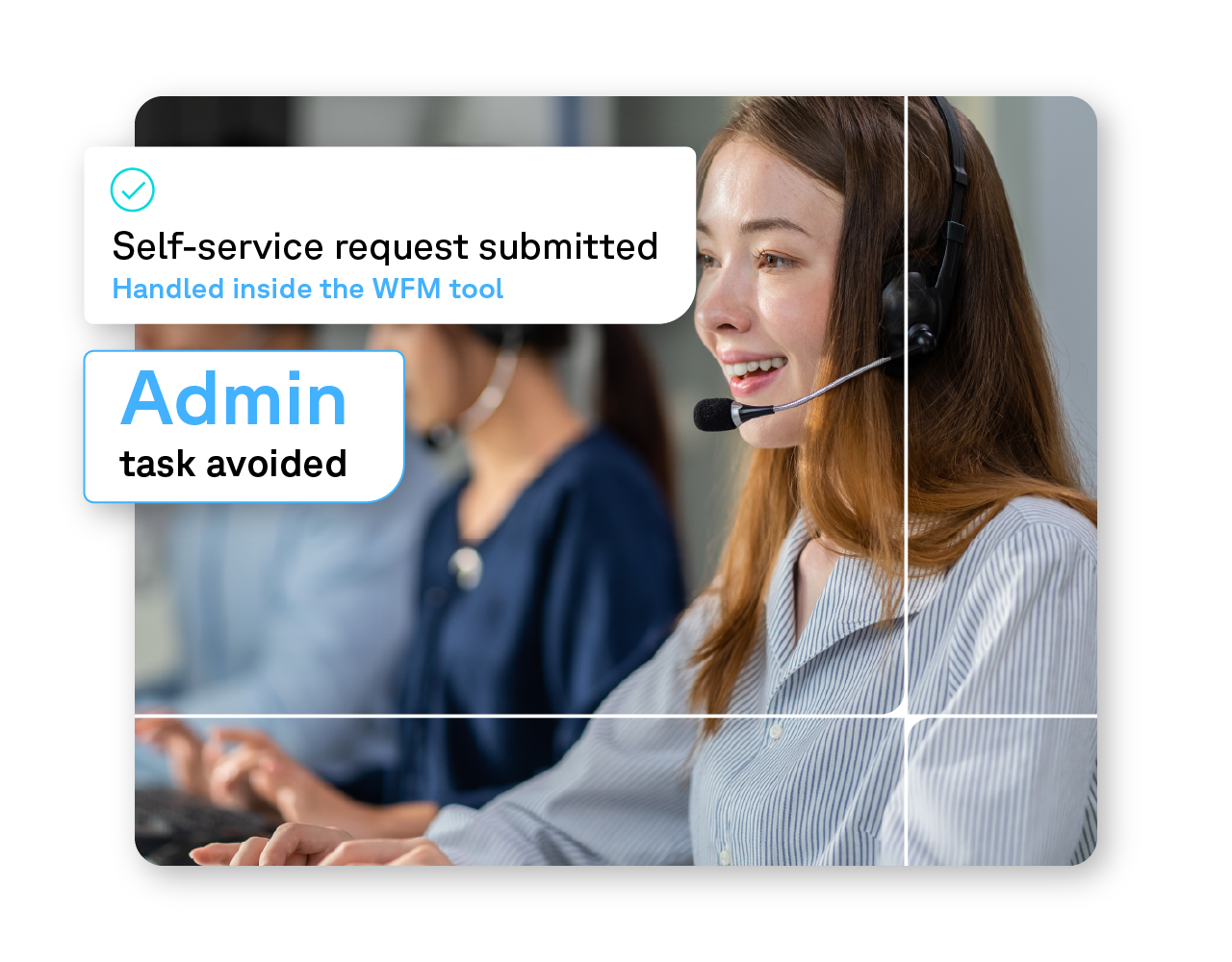
Agents handle shift swaps, time-off requests, preference inputs, and adherence visibility inside the WFM tool. Small operational decisions sit with the people best placed to make them, and supervisors spend less time on administrative work.
WFM works best when planning, real-time control, and reporting share signal. We deploy it alongside the rest of the employee experience layer.
#01
Real-time control of routing, skills, and service settings, without back-end tickets.
Learn more about SMC

#02
The reporting and insight layer that feeds back into the next forecast.
Learn more about CCBI

Contact center workforce management helps teams forecast demand, schedule agents, manage intraday changes, and track adherence. The goal is to align staffing and skills with the work customers are actually generating across voice and digital channels.
Workforce management focuses on staffing activities such as forecasting, scheduling, intraday management, and adherence. Workforce optimization is broader, bringing WFM together with capabilities such as quality management and analytics.
WFM brings volumes, handle times, shrinkage, skills, and channel mix into workforce planning. This helps contact centers build schedules around demand across voice, chat, email, and back-office work rather than relying on voice patterns alone.
Intraday management gives teams visibility into what’s happening across queues throughout the day. Supervisors can identify changes in demand and adjust coverage before those changes negatively affect service levels.
Real-time adherence gives supervisors and agents visibility into how actual activity compares with the workforce plan. This helps teams address exceptions as they happen and gives supervisors better information for coaching conversations.
Webex workforce management supports agent self-service for shift swaps, time-off requests, scheduling preferences, and adherence visibility. This gives agents more control over routine scheduling needs while reducing administrative work for supervisors.
Bucher + Suter works primarily with Webex WEM and Webex Workforce Optimization (Webex WFO) and can support other enterprise WFM platforms where the environment calls for it.