
Skip to content
Solutions

Lower cost-to-serve by fixing what creates it.

Cost is built into the operating model long before it lands on a budget line. Bucher + Suter helps CX leaders trace cost back to where it originates.

A man in a navy blue suit and light blue dress shirt sits at a desk typing on a laptop to manage contact center cost optimization.

Cost reduction and CX go hand in hand.

Contact centers run leaner when they treat cost-to-serve as an outcome of how the operation works. Here’s how we help them do it:

#01

Stop paying for the same conversation twice.

Cost to serve quietly hides in repeat contacts, transferred calls, after-call rework, and handoffs that drop context between teams. Our team pinpoints where context drops, where workflows fork, and where data siloes create inefficiencies.


Smiling customer support agent wearing a headset next to an overlay text box stating, Case reopened. This issue has surfaced before, illustrating contact center cost optimization.

#02

Cut handle time where workflows create it.

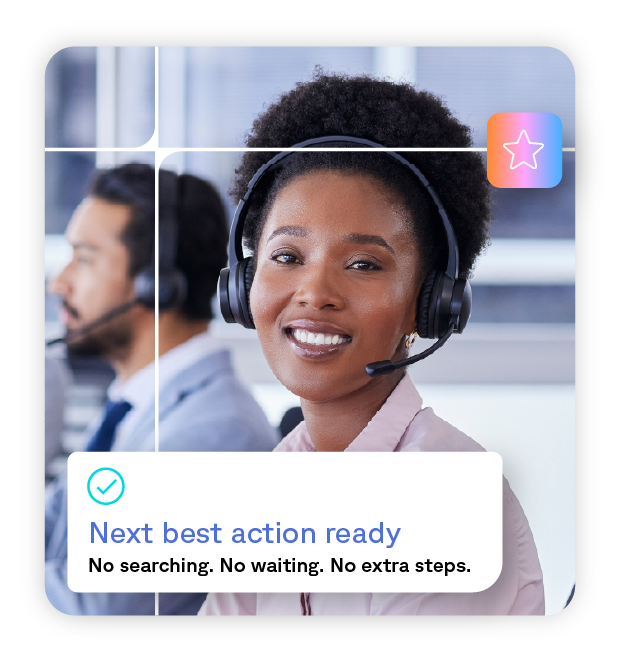
Handle time gets watched, but most of what pads it doesn't belong to the agent. It belongs to the workflow they're working inside. We rebuild that workflow so the next-best action is already on the screen by the time the agent needs to take it.

A smiling customer support representative wearing a headset sits next to a text box promoting contact center cost optimization with the message: Next best action ready. No searching. No waiting. No extra steps.

#03

Hold AI accountable for the work it takes on.

AI lowers cost in proportion to what it actually resolves at the point of contact. When the resolution isn't real, the customer's next call shows up tomorrow on a more expensive channel, and the original cost reduction quietly evaporates. We connect AI to the workflow it's deployed inside, so the work it takes on becomes work that doesn't return.

A customer service representative wearing a headset smiles, with a text box that reads Case resolved, No follow-up required and a handshake icon, highlighting contact center cost optimization.

#04

Govern AI consumption before it governs the budget.

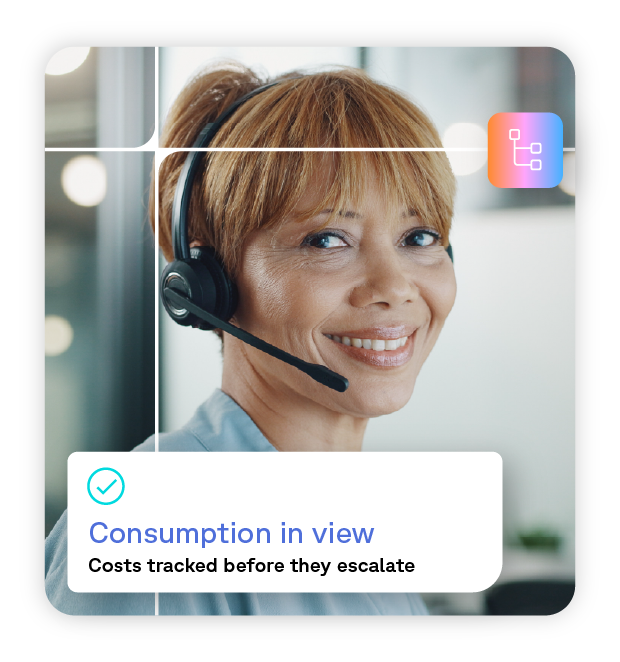
Pricing in the contact center isn't only seats anymore. Usage, automation events, and AI consumption now sit inside vendor contracts as line items that grow quietly with call volume. We instrument cost-per-resolution so finance and CX read the same number, and put guardrails on the spend before it becomes a quarterly surprise.

A customer service representative wearing a headset with a text overlay reading Consumption in view. Costs tracked before they escalate to demonstrate contact center cost optimization.

Proof in operations that had to control cost without slowing down.

Testimonials wave
Republic Services logo consisting of a stylized star emblem made of ribbons next to the company name in bold, black text, often utilized in contact center CRM integration.

Republic Services

Republic Services lowered service costs by tightening how Salesforce works for agents. Real-time operational visibility, contextual workflows, and fewer manual steps across the case lifecycle translated to lower ongoing service costs without changes to the staffing model.

• Lower IT costs, leaner ops
• 27% AHT cut at scale
• Faster answers, lower handle times
• Caller context before answering

Read the case study →

Frequently asked questions

Contact center cost optimization identifies and addresses the operational issues that increase the cost of serving customers. This can include repeat contacts, unnecessary transfers, manual work, disconnected systems, inefficient workflows, and AI interactions that fail to resolve the customer’s request.

Start by reducing the friction that creates unnecessary work. Preserving customer context, improving workflows, eliminating avoidable handoffs, and giving agents the right information at the right time can lower service costs while maintaining a strong customer experience.

Repeat contacts and transferred calls require the contact center to spend more time resolving the same customer need. When conversation history or customer context is lost between channels and teams, agents may need to repeat work that has already been completed.

Average handle time often increases when agents must search for information, switch between systems, or complete unnecessary manual steps. Improving the workflow and presenting the next best action when it is needed can help agents move through interactions more efficiently.

AI can lower costs when it fully resolves suitable customer requests or helps agents complete work more efficiently. Connecting AI to the surrounding workflows helps ensure that automated interactions lead to real resolutions rather than repeat contacts through more expensive channels.

AI consumption, automation events, and usage-based pricing can increase as interaction volumes grow. Tracking cost per resolution and setting appropriate spending guardrails gives CX and finance teams clearer visibility into whether that technology is producing measurable value.

Cost per resolution measures contact center spending in relation to customer issues that are actually resolved. It provides a more complete view than looking only at individual interactions, especially when an unresolved request leads to repeat contacts or escalation to another channel.

Scope cost-to-serve to your operation.

Talk with our team to uncover your true drivers of operating cost.