


Skip to content
Manufacturing & Automotive

Service ops for the complexity of your products and speed of your contracts.

We build contact center environments for manufacturing and automotive organizations, connected to the CRM, ERP, and product systems behind every service interaction.

A woman wearing a hard hat, safety glasses, and a high-visibility vest uses a tablet for manufacturing contact center solutions in a factory with robotic arms.

Service is where company commitment meets customer reality

What gets sold is the product. What gets tested every day after is the service operation behind it.


Service traffic spans warranty registrations, parts orders, status checks, and high-complexity diagnostics. Treating them as one queue means routine inquiries slow down the technical ones, while technical issues disrupt resolution times for the routine.

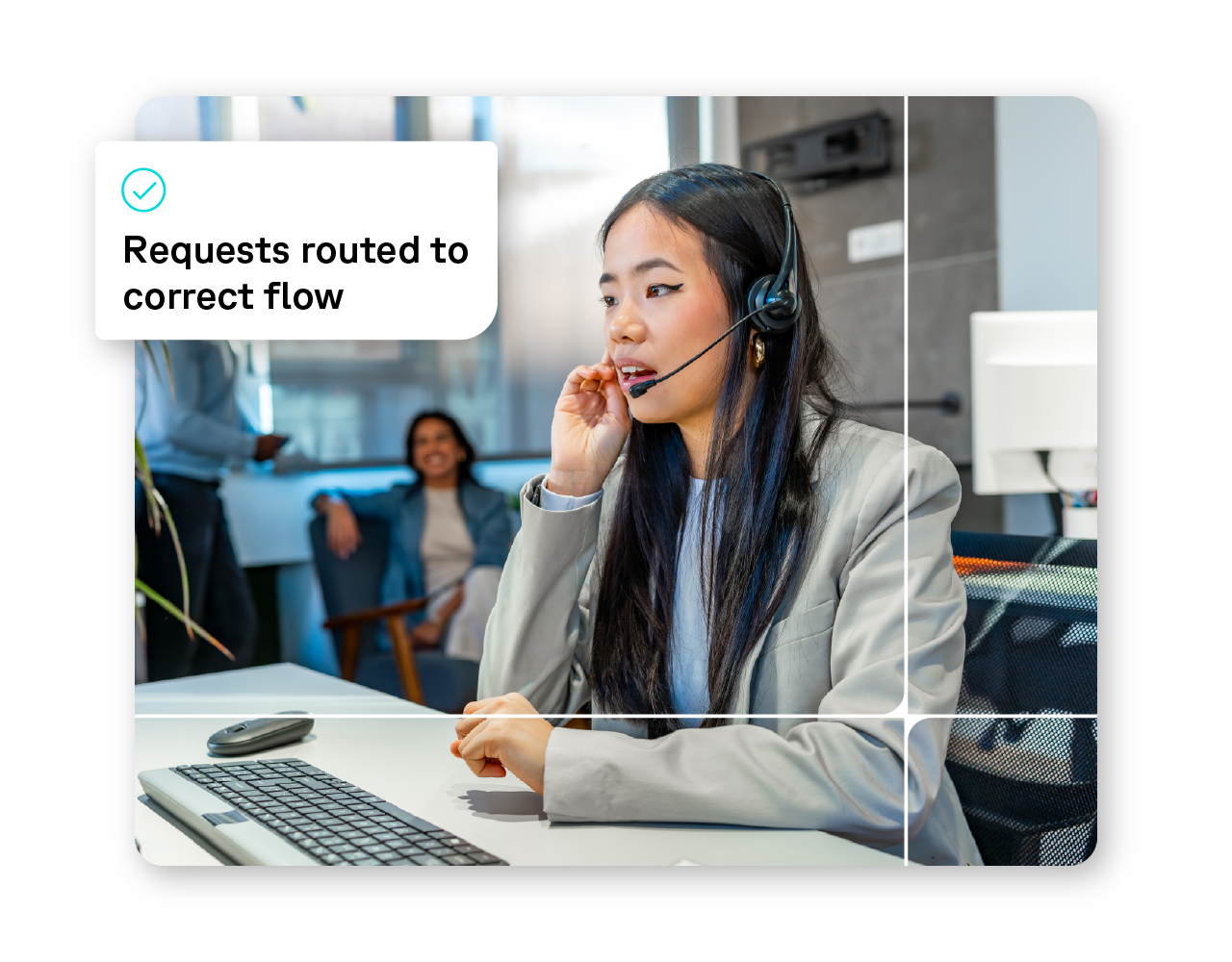
A customer service representative wearing a headset sits at a desk with a computer, using manufacturing contact center solutions to ensure requests are routed to the correct flow.


Customer history lives in the CRM. Product and asset data sits in the ERP or PLM. Service entitlement is in contracts that may or may not be linked to either. When systems aren’t connected, agents spend valuable time switching between them.

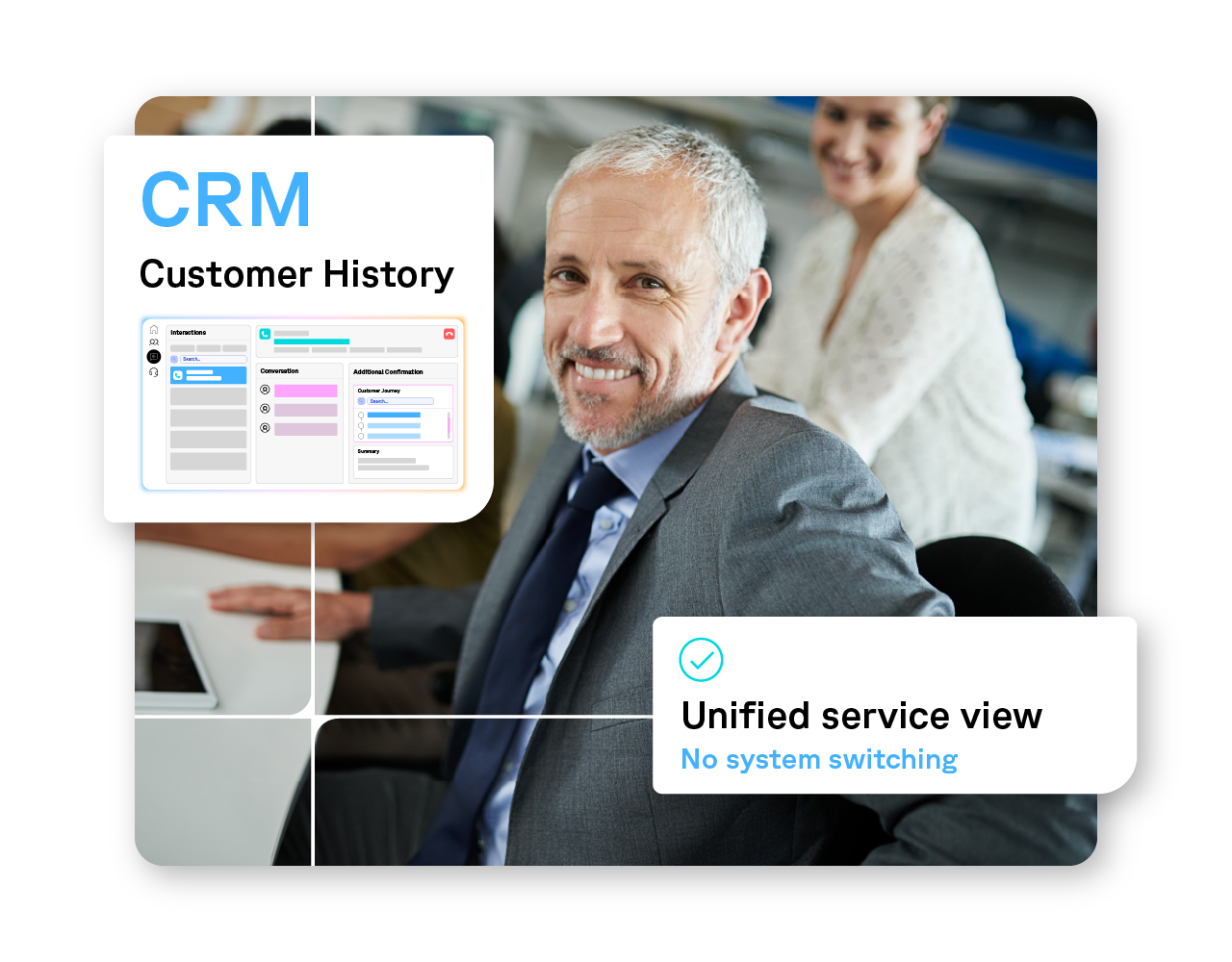
A professional man smiles at his desk while reviewing CRM customer history and the benefits of a unified service view within manufacturing contact center solutions.


A line going down, a dealer waiting on a part, or a warranty claim affecting a fleet contract: each carries consequences that show up in operational metrics within hours, and in renewal conversations within months.

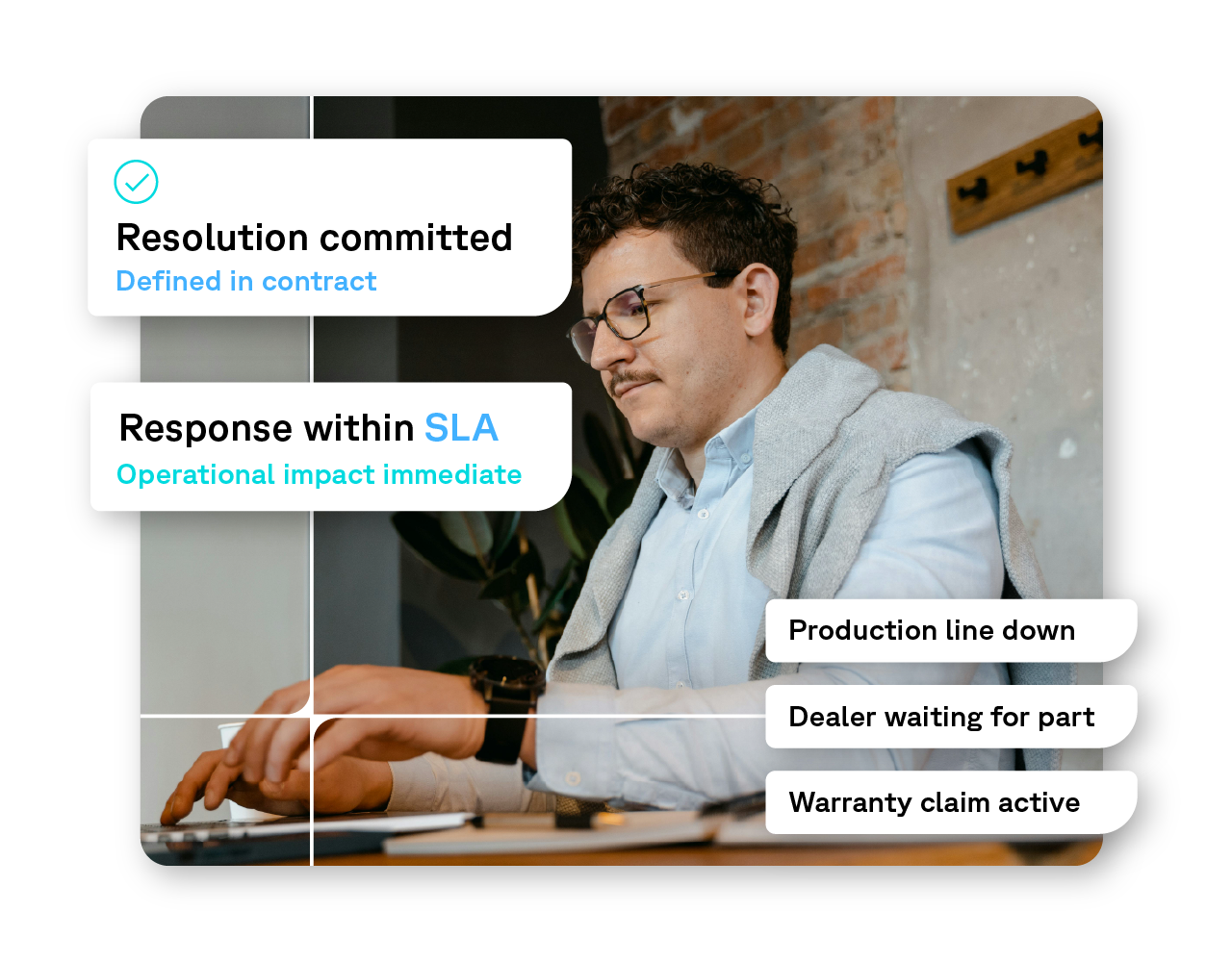
A man working at a laptop with manufacturing contact center solutions callouts, including Resolution committed, Response within SLA, Production line down, Dealer waiting for part, and Warranty claim active.


End customers, distributors, dealers, OEM partners, and internal field service teams all reach the contact center. But they do so under different access rights, entitlements, and escalation paths.

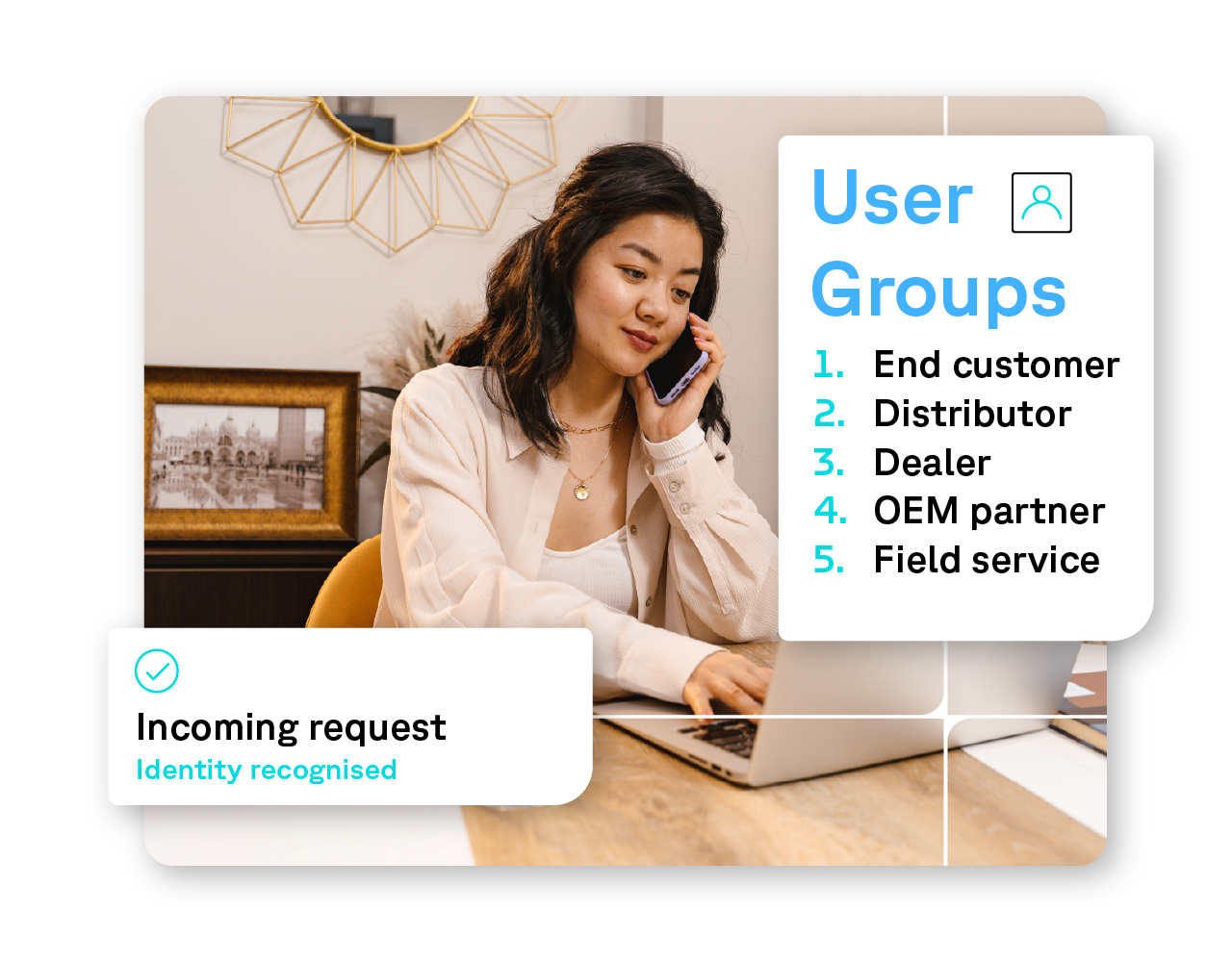
A woman uses a laptop and phone in a manufacturing contact center solution, managing requests from end customers, distributors, dealers, OEM partners, and field service teams.

What an effective service operation looks like in practice.

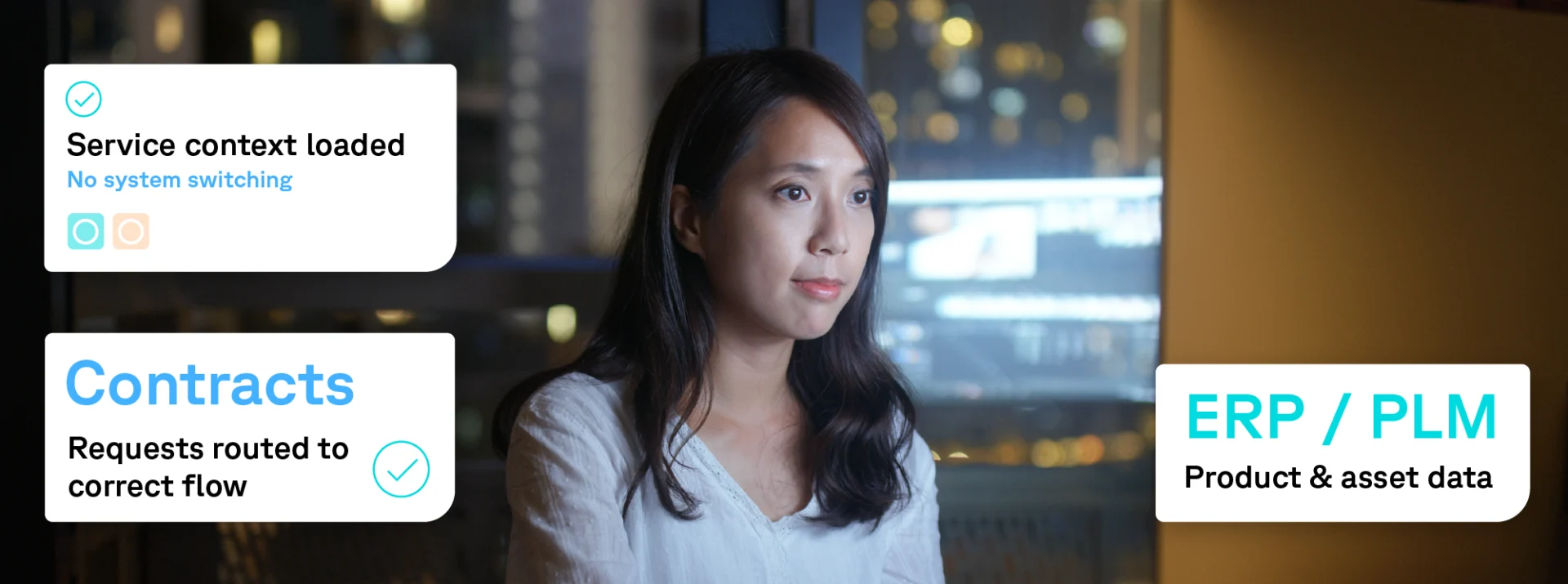
A woman looks toward the camera, framed by digital overlays displaying manufacturing contact center solutions, including workflow notifications for Service context, Contracts, and ERP / PLM.


Customer support representatives wearing headsets in a manufacturing contact center, with Microsoft Dynamics 365, Cisco Partner, and Salesforce logos overlaid.

Routing logic tuned for product-line and entitlement-driven queues, with channel coverage across voice and digital channels. The scale to absorb seasonal warranty cycles, new-product launches, and recall events when they happen. Cloud, private cloud, and hybrid options are available so the deployment fits the production and IT realities of your organization.

Customer support representatives wearing headsets in a manufacturing contact center, with Microsoft Dynamics 365, Cisco Partner, and Salesforce logos overlaid.

b+s Connects integrates Cisco and Webex Contact Center with Salesforce, Microsoft Dynamics, and ServiceNow. The agent works from the CRM as a single workspace, instead of switching between the phone system and the customer record. Customer history, open cases, and service entitlement travel with the interaction the moment it arrives.

Customer support representatives wearing headsets in a manufacturing contact center, with Microsoft Dynamics 365, Cisco Partner, and Salesforce logos overlaid.

Conversational AI handles status checks, order lookups, and the routine intake work that doesn't need an agent. Behind the live queue, AI categorizes incoming cases by product, urgency, and entitlement, surfacing relevant technical knowledge to agents during the call. Human judgment stays in the loop for diagnostics, escalations, and anything the customer relationship depends on.

Customer support representatives wearing headsets in a manufacturing contact center, with Microsoft Dynamics 365, Cisco Partner, and Salesforce logos overlaid.

Service operations can't go offline for a transformation project. Migrations from on-premise to cloud, expansions into new digital channels, and additions of AI-assisted handling proceed in stages designed around the production calendar and the service-level commitments already in place. Customer success and managed services handle the ongoing operational work after go-live, so the environment stays current as platforms evolve and as the operation grows.

Case study: context across every service interaction.

Testimonials wave
Daktronics logo featuring a stylized letter D and the company name, your contact center transformation partner.

Daktronics: service operations for a complex, product-driven environment.

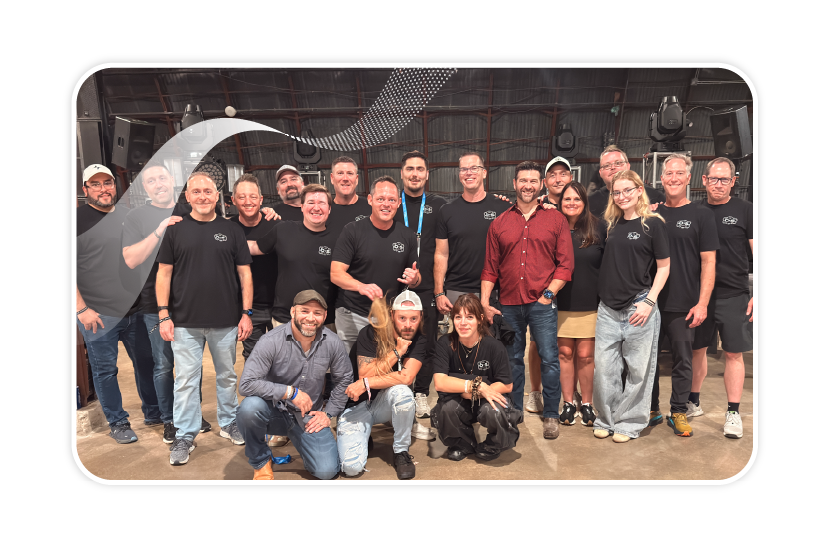
Daktronics manufactures large-format digital display systems installed in venues, transportation networks, and commercial environments worldwide, with a service operation supporting those installations across long product lifecycles. The contact center is where end customers, integrators, and field technicians reach the company when an installed system needs attention.

Working with Bucher + Suter, Daktronics integrated its Cisco contact center with the CRM workflows behind its service operation. Routing was structured around product, customer, and case context. Agents began working from a consolidated view of the customer and the installation. Handoffs between frontline support and technical specialists moved inside the workflow, so context traveled with the case rather than getting reconstructed at every step.

Read the Daktronics case study →

Latest resources for manufacturing and automotive CX leaders

Insights on connected service operations, AI, and contact center technology, helping teams support customers, dealers, and partners with greater speed, context, and efficiency.

Frequently asked questions

Manufacturing and automotive organizations need contact center technology that connects customer interactions with the CRM, ERP, product, and service systems behind them. Routing should account for product lines, issue types, and contract terms while giving service teams the customer, asset, warranty, and case context they need.

Warranty registrations, parts orders, and status checks have different service requirements than complex diagnostics. Separating and routing these interactions based on the issue, product, and service entitlement helps routine requests reach the appropriate resource while technical cases get to specialists.

Customer history may live in the CRM while product, asset, and warranty information sits across ERP, PLM, and contract systems. Connecting these systems gives service teams easier access to the information behind each interaction and reduces the need to switch between separate tools.

End customers, distributors, dealers, OEM partners, and field service teams can have different access rights, service entitlements, and escalation paths. Entitlement-aware routing directs inquiries based on factors such as product line, issue type, and contract terms.

Conversational AI can support routine work such as status checks, order lookups, intake, and case classification. It can also surface relevant technical knowledge for agents, while diagnostics, escalations, and other interactions that depend on human judgment remain with service teams.

Connected workflows allow cases to move between frontline support and technical specialists with the relevant customer, product, and case information intact. This helps specialists continue the interaction without requiring customers, dealers, or partners to repeat information.

Yes. Cloud migrations, digital channel expansion, and AI-assisted handling can be introduced in stages around production calendars and existing service-level commitments, allowing the service operation to continue while the environment evolves.

Contact center environments can be designed with the scale and routing needed to absorb changing service demand, including seasonal warranty cycles, new-product launches, and recall events.

Service excellence at every turn.

One environment for voice, digital channels, and the systems behind your service operation.