
88 %
of service leaders are prioritizing tech integration to bring data together, eliminate silos, and unlock the full potential of AI.
Bucher + Suter turns Salesforce into the operating layer for service. Voice, contact center, and AI work as one connected system.


88 %
of service leaders are prioritizing tech integration to bring data together, eliminate silos, and unlock the full potential of AI.
1.4 x
more likely to achieve a "very successful" AI implementation when service teams unify customer service channel data.
50 %
of service cases are expected to be resolved by AI by 2027, up from 30% in 2025.
Source: Salesforce, State of Service, 7th Edition (2025)
With the platform in place, what decides whether Salesforce delivers service outcomes is the operational layer around it.
#01
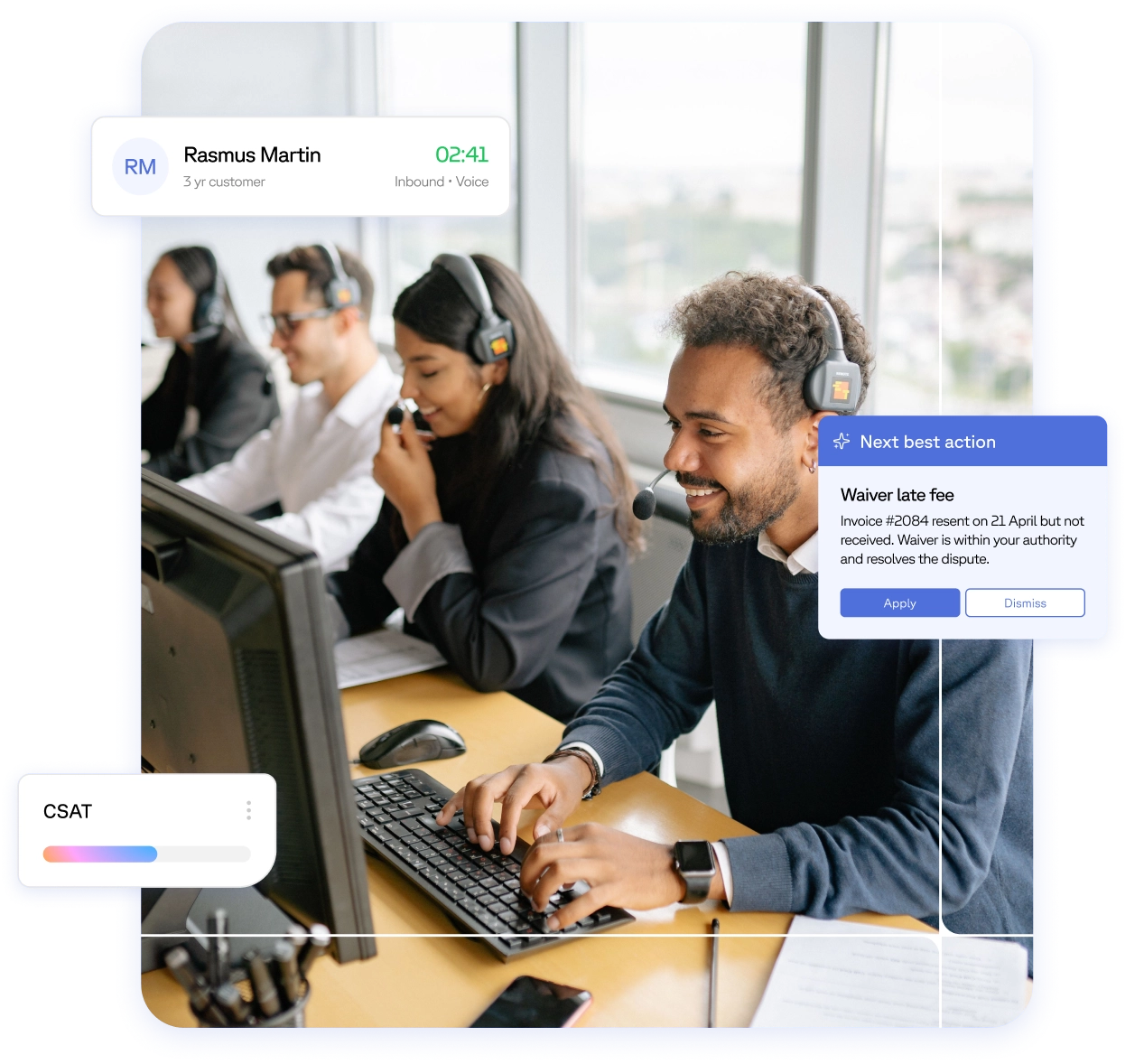
b+s Connects for Salesforce Voice (formerly Service Cloud Voice) makes the phone channel native to the agent workspace, so calls happen alongside cases, knowledge, and customer history. Real-time transcription, AI-suggested next actions, and case context all sit in one screen, keeping agents in flow during the moments where service quality is decided.
Integrate voice across telephony, contact center routing, and reporting. →
#02
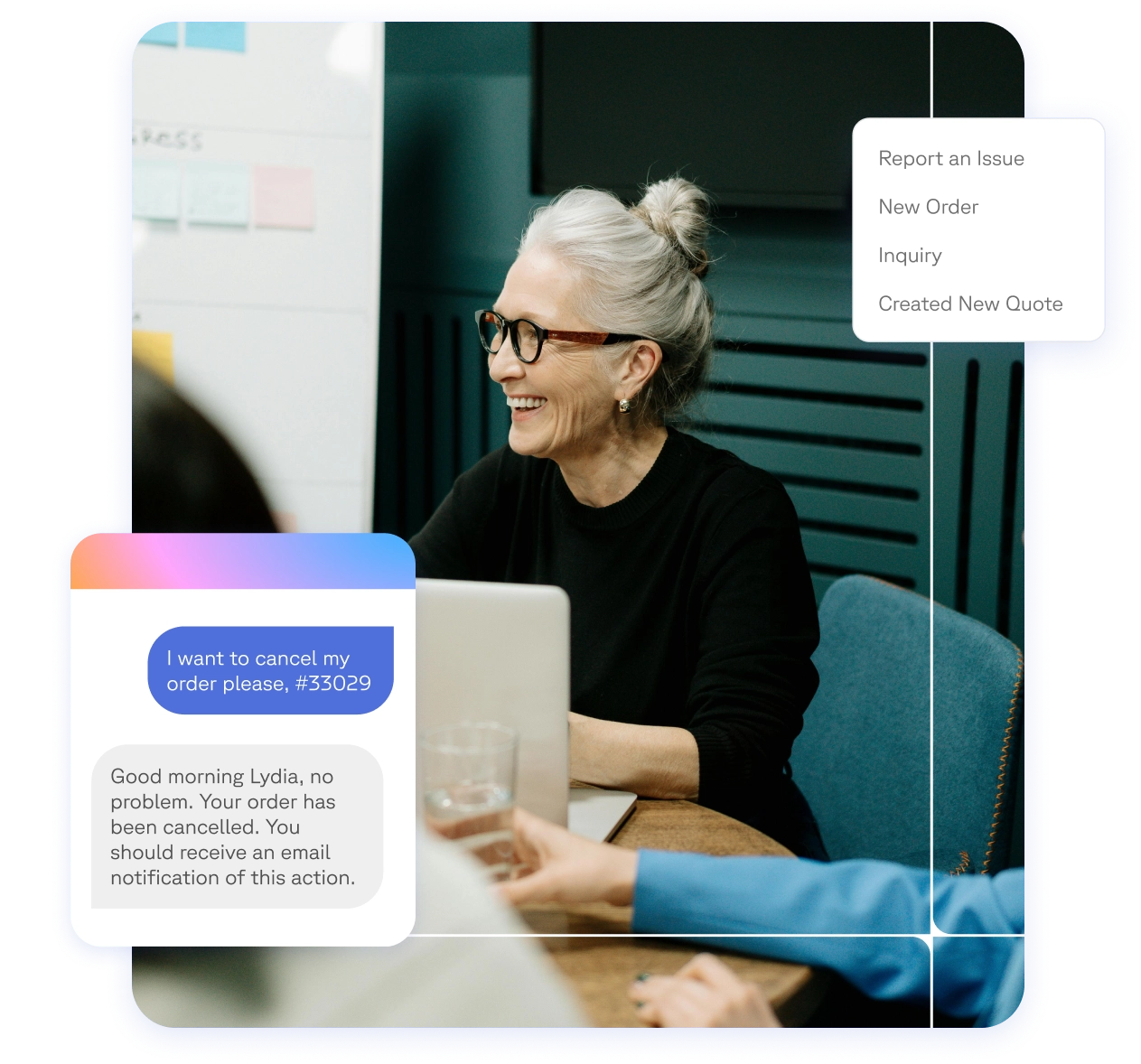
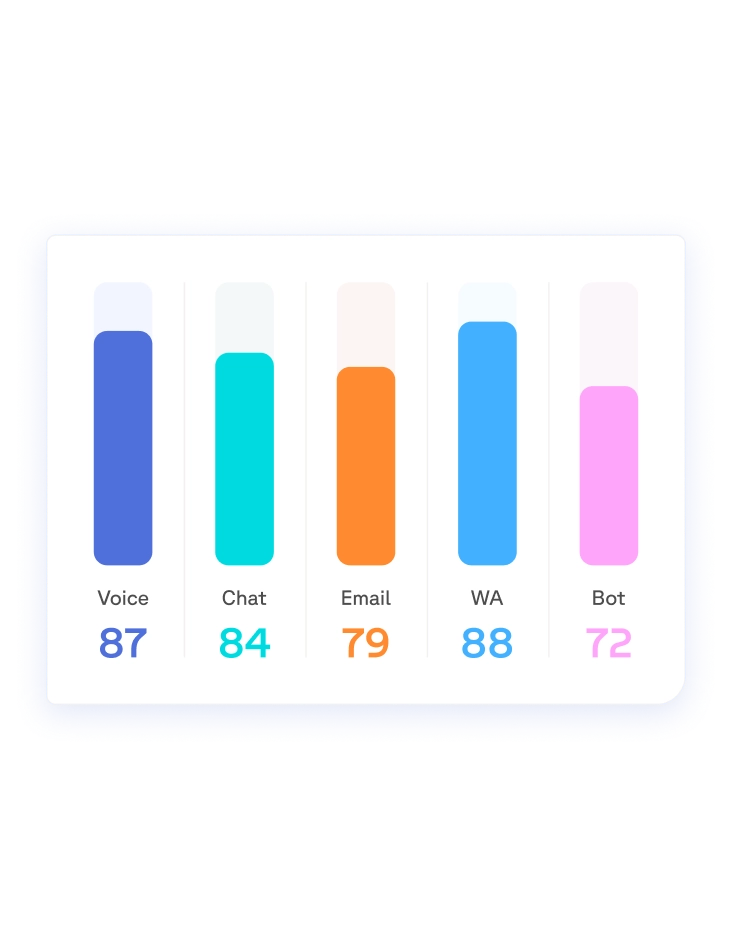
Messaging, web chat, email, and social belong to the same service operation as voice, but they're often managed as separate stacks with their own SLAs, reporting, and agent tools. Bringing those channels into Salesforce as part of one workspace means routing decisions, case continuity, and customer context move with the conversation regardless of where it started.
Integrate Salesforce with the messaging, chat, and routing platforms you already run. →
#03
The operational backbone of an enterprise service operation has to be consistent, whether the work is triggered from Salesforce, Webex Contact Center, or somewhere in between. Done well, that backbone absorbs platform change rather than breaking under it.
Keep routing, orchestration, and reporting consistent across Cisco + Webex Contact Center. →
#04
Agentforce capabilities like Work Summaries, Next Best Actions, and Article Recommendations are increasingly part of the day-to-day agent experience. For deeper automation of contact handling, Agentforce Voice, Agentforce Service Agent and Webex AI Agent are both technologies whose fit depends on how voice and AI are governed in your operation.
Integrate AI into case workflows, escalation paths, and reporting. →


Worked with Bucher + Suter to build deeply customized service workflows into Salesforce, automating how agents identify callers, surface account history, and act on open cases before a conversation begins.

Moved from a Finesse desktop to b+s Connects for Salesforce giving agents caller context, account history, and open cases at the moment of the call, with the real-time queue visibility supervisors needed to stay ahead of volume. The integration paid for itself in seven months.

Built a Salesforce-integrated service ecosystem where Webex Contact Center, digital channels, and AI components were designed to work together as one operating model. Now customer context, voice interactions, and AI-supported workflows reach agents at the same moment.
Salesforce contact center integration connects customer interactions with the data, cases, and workflows agents use in Salesforce. Bucher + Suter brings voice, digital channels, contact center routing, and AI into a more connected service environment, helping agents work with customer context in one place.
b+s Connects for Salesforce Voice brings the phone channel into the Salesforce agent workspace, alongside cases, knowledge, and customer history. It connects voice across telephony, contact center routing, and reporting so agents can handle calls within the same environment as their case work.
Yes. Bucher + Suter connects Salesforce with Cisco and Webex Contact Center environments so customer context, voice interactions, routing, and service workflows can work together as part of a connected operating model.
Yes. Messaging, web chat, email, and social channels can be brought into the Salesforce service environment so routing, case continuity, and customer context move with the conversation regardless of where it started.
Bringing voice and customer context into the Salesforce workspace gives agents access to calls, cases, knowledge, and customer history in one place. With b+s Connects for Salesforce Voice, capabilities such as real-time transcription and AI-suggested next actions can also sit within that experience.
Agentforce capabilities such as Work Summaries, Next Best Actions, and Article Recommendations can become part of the day-to-day agent experience. Bucher + Suter helps integrate AI into case workflows, escalation paths, and reporting so it works within the wider service operation.
Connecting Salesforce with voice, digital channels, routing, and AI helps keep customer context and service workflows together as interactions move through the contact center. The goal is a more consistent operating model instead of separate systems for different channels and customer service tasks.