
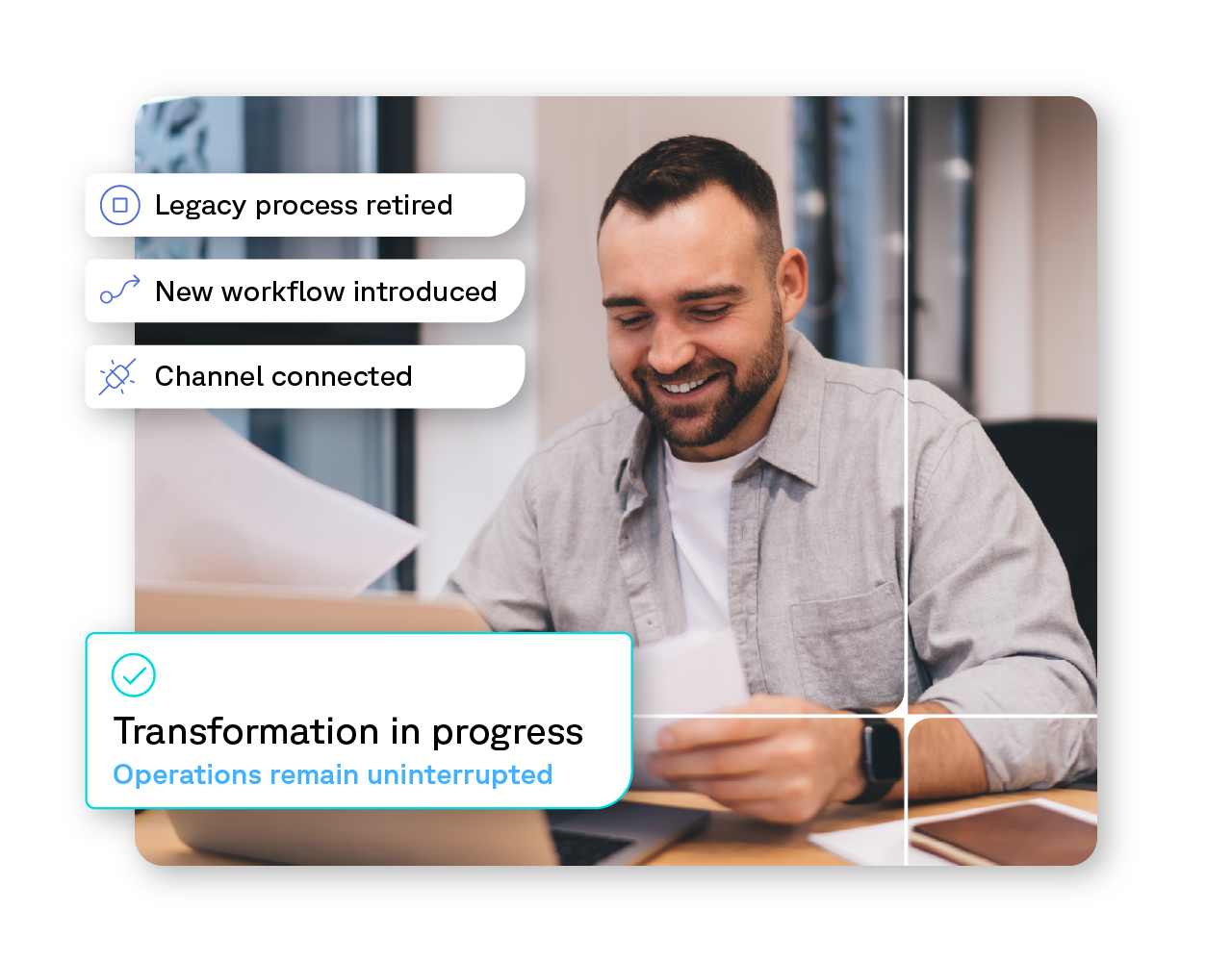
Improve what's already running
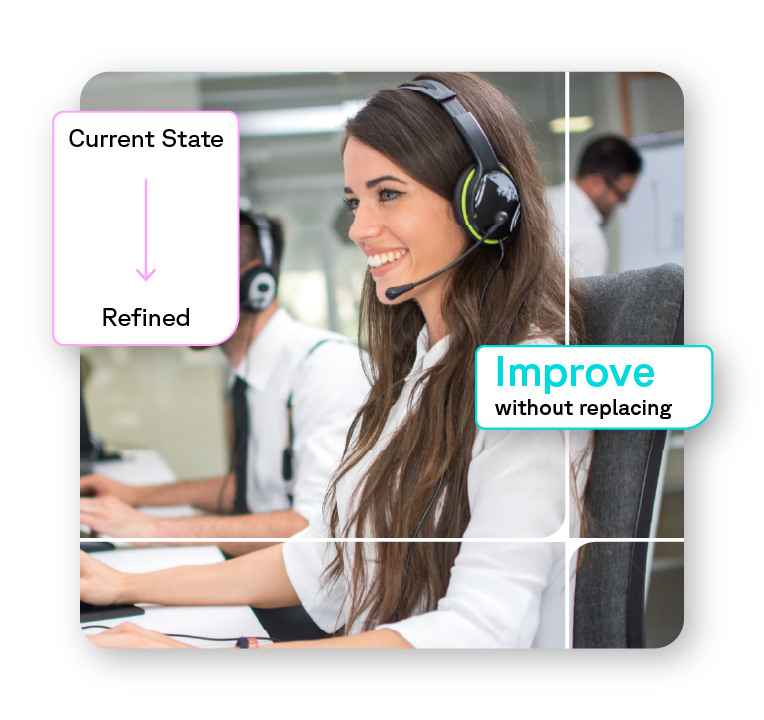
Existing platform stabilization, or re-fitting it to how operations run today.

Improve service quality. Stay ready for what’s next. Let’s find the optimal path forward.
It's how the contact center stops paying maintenance tax on legacy decisions and starts adding capabilities the operation can build on.
Getting there is about more than choosing the right platform. It’s about the discipline that turns platform investment into operational lift.
Our customer success and operations teams stay engaged after go-live. The platform gets reassessed on a regular cycle so it keeps pace with how the operation actually runs.
We deliver modernization in phases that map to your operation's traffic patterns and operating constraints. Each change carries a defined rollback path, and live operations keep running throughout.
We modernize the integration and data layers that AI and new digital channels depend on, ahead of any deployment. That sequencing is what keeps AI rollouts predictable in production.
The right modernization move depends on what's running today and what has to change. We help you scope the path that fits best.
Contact center modernization improves the platforms, integrations, data, and workflows supporting customer service. Depending on the current environment, that may mean optimizing an existing platform, migrating to the cloud, or creating a deliberate hybrid contact center architecture.
Modernization may be necessary when legacy technology limits service quality, slows the introduction of new capabilities, or no longer fits the way the contact center operates. Reviewing the current environment against future service needs can help identify the right path forward.
Not always. The right approach may be to stabilize and improve the platform already in place, move selected capabilities to the cloud, or adopt a hybrid model. The best path depends on what is running today and what the operation needs to support next.
A phased modernization plan can align changes with traffic patterns and operational constraints. Defined rollback paths and careful sequencing help protect live operations as platforms, integrations, and workflows evolve.
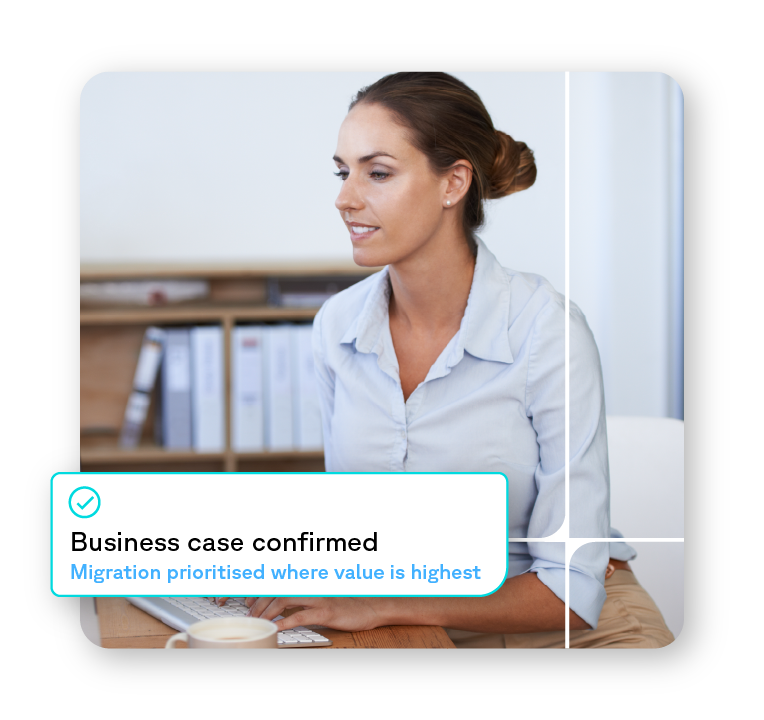
A cloud contact center can support faster change cycles and access to new capabilities, but migration should be based on a clear business case. For some organizations, improving the existing platform or using a hybrid cloud model may be a better fit.
A hybrid contact center combines cloud and existing technology within a deliberately designed architecture. Its integration layer connects the different environments so customer context, data, and workflows can move across the operation.
AI and digital channels depend on connected integration and data layers. Modernizing that foundation before deploying new capabilities helps make AI and omnichannel implementations more predictable in production.
Modernization continues after launch. Regularly reassessing the platform helps it keep pace with changing workflows, customer expectations, and operational needs.