




#01
Why Bucher + Suter?
Make AI work for
people.
AI should support service, not get in the way of it. Bucher + Suter focuses on AI that supports people and processes, fits the wider contact center properly, and holds up in practice.

Trusted by leading organizations.





A more practical way to approach AI.
There’s a lot of pressure to “do AI” right now. The harder part is knowing where it genuinely helps, where it creates risk, and how to introduce it without making the operation harder to run. That’s where we take a different view:
How we make AI useful.
AI only adds value when it fits the real conditions of the contact center. That means looking at the work, the people doing it, the systems around it, and the level of control the business needs to keep.
Start with the right use cases.
We look at where AI can genuinely improve service, reduce pressure, or remove repetitive manual work.

Support agents.
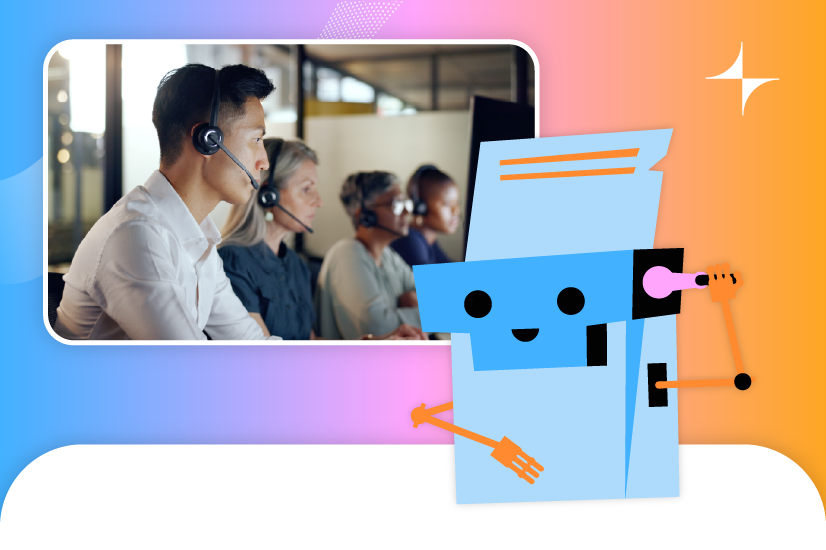
AI works best when it helps agents do their job better, with more context, less repetition, and fewer unnecessary delays.

Keep people in control.
Some interactions need judgment, care, and escalation. We make sure humans stay involved where they need to.
Build on what’s ready now.
Most organizations are not ready to scale AI across the board. We help identify where it makes sense to start and what needs to be in place first.
Protect the customer experience.
AI should make service clearer and easier, not harder to navigate. We design with handover, context, and continuity in mind.

Make it hold up over time.
The real test is what happens after launch. We help make sure AI continues to work as needs, volumes, and expectations evolve.
Use AI where it creates value.
AI strengthens service across the contact center, especially for simple, repeatable tasks where speed and consistency matter. Verification, account updates, password resets, knowledge lookups, and basic triage are often good places to start.

Keep the experience effortless.
Customers shouldn’t have to repeat themselves because one channel, tool, or workflow can’t see what another one did. We help connect AI into the broader service environment so context stays visible, handovers are smoother, and agents have what they need.

Introduce AI without adding complexity.
AI shouldn’t introduce unclear journeys, more pressure on teams, and extra operational overhead. That’s why we start with the right use cases, prioritize governance, and design clear escalation paths.

Proof from real
environments.
Bucher + Suter has helped organizations introduce AI in ways that support self-service, protect service quality, and keep human control where it matters.


Enersuisse
Cross-channel AI that supports self-service
We introduced chat and voice bots as part of a broader, cross-channel AI ecosystem to support customer self-service while keeping escalation paths, control, and service consistency in place.

Global insurer
AI-supported digital service at scale
We helped an enterprise contact center use chat alongside voice and messaging channels, with AI-supported interactions helping scale digital engagement, all while preserving service quality.


Frequently Asked Questions
Usually in the areas that are simple, repeatable, and high-volume. That might include verification, routine updates, knowledge-led queries, or early-stage triage. The key is being clear about where AI adds value and where it doesn’t.
By starting with the real experience, not the technology alone. We design AI around the customer journey, the agent workflow, and the need for smooth handover when automation stops being helpful.
We design clear escalation paths and make sure people stay involved where judgment, empathy, or risk need a more careful response. AI should support the service model, not override it.
It means setting clear boundaries around what AI should do, how it should behave, when it should hand over, and how performance should be reviewed over time. In practice, it’s about keeping control as the capability grows.
That’s fine. Not every organization needs to move at the same pace. We help identify where you’re ready now, what foundations need work first, and where AI can be introduced without overwhelming the operation.
By treating AI as part of your wider CX platform, including the contact center, rather than a one-off layer. We stay focused on how it performs in practice, how it affects customers and agents, and how it needs to evolve as the operation changes.