
For years, contact centers have waited for speech-to-speech translation that runs live in the conversation and carries the speaker’s tone across languages. With Cisco’s Translator Agent reaching general availability for Webex Calling in Q3 2026, this level of real-time translation is going operational.
For an operator serving European and multinational markets, the commercial arrival of real-time translation offers new answers to an old question: how many languages do we need to staff for?
The European Union operates in 24 official languages. Firms often serve populations and languages well beyond the EU.
“For years, offering service across that range of languages meant recruiting and retaining native speakers in each market, then carrying that cost whether call volume in a given language justifies it or not.”
Now, language coverage depends a lot less on who is already on staff. Contact centers have a stronger cost argument (less need to add headcount) for supporting languages they once excluded. The question becomes, which conversations are safe to run through machine translation, and which still need a native speaker?

What’s shipping: real-time translation for Calling, Contact Center to follow
The version of real-time translation arriving in Q3 is built for Webex Calling,as No Jitter reported from Cisco Live 2026. Cisco has said support for Webex Meetings and Webex Contact Center will follow, without committing to a date. For contact centers, and on-premises deployments in particular, real availability likely comes later in that sequence.
Right now, this is a capability to prepare for rather than procure. It’s real and on Cisco’s roadmap, although the version that reaches your contact center is still some way out.
Consider your contact center setup against the publicly available roadmap. Which conversations will you add real-time translation to? How will you orchestrate handoffs? For regulated operators, where will you keep translated conversations and their records?

How real-time translation shifts focus from hiring to routing
Once real-time translation is built into the platform, adding a language no longer means adding headcount. At least not the way it once did. Your existing agents, already trained on your products and regulated processes, can take interactions in languages they don’t speak.
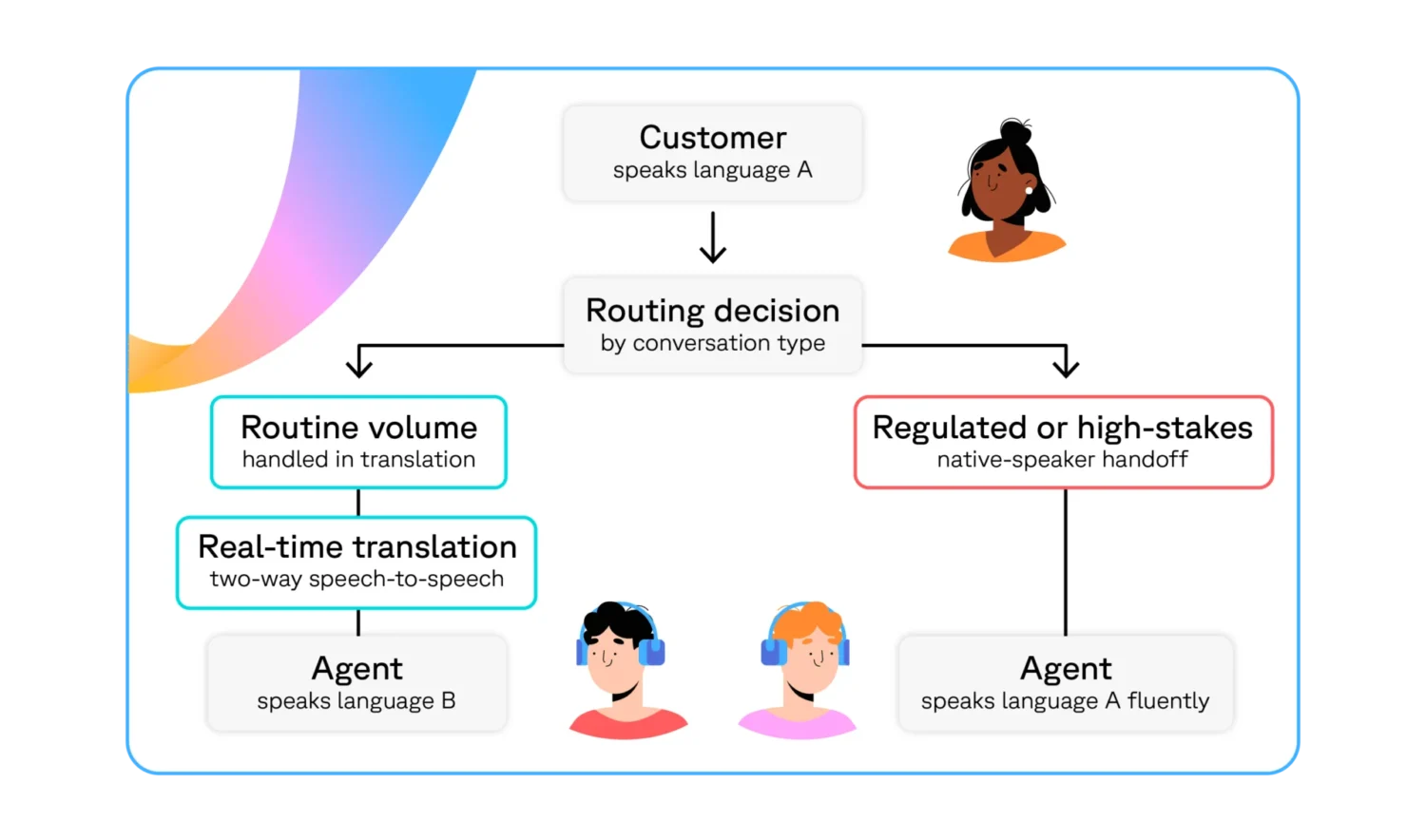
Because the same team can support more languages, markets that never generated the volume to justify a dedicated language line become viable. Reaching customers in their own language used to be a reason to delay entering a market or serve it thinly; when coverage rides on capability rather than recruitment, reach becomes a strategic choice about which markets to pursue, freed from the staffing costs that used to decide it.
Real-time translation quality is now high enough to handle deployment across a large share of everyday interactions. That turns a hiring decision into a routing one. Now the question centers around which conversations should run through it, and which shouldn’t.

Caveat: real-time translation for routine volume; native speakers for regulated conversations (for now)
For the routing strategy, think of the stakes and regulations. For example, a delivery status check interaction can tolerate an occasional imperfect phrasing, making it a strong candidate for real-time translation. On the other hand, an insurance claim filed after a bereavement has little tolerance for a translation that lands slightly wrong. In regulated contexts, machine translation can easily turn into a liability, which is why some conversations stay human by design.
This is the part of a deployment we spend the most time on with clients: where to set that line, and how to build the handoff. In banking and finance and health insurance, routing tends to follow the same contours as compliance obligations, so it requires attention early on.
Related reading: Escalation Design: Why AI Fails at the Handoff (Not the Automation)

Assessing present-day fit for real-time translation in the contact center
If you’re weighing this now, a short readiness check tells you where you stand before contact center availability arrives:
- Which markets and interaction types are candidates, and which your quality bar rules out
- How it fits the Cisco platform you’re already running, and the upgrade path in front of it
- For regulated operators, where translated conversations and their records are allowed to be kept, which brings your European private cloud footprint and data obligations into the same decision
You don’t need the release to be live to work through any of this. Doing it now means you enter that release with your quality thresholds and routing rules already decided, so adoption is a rollout you direct.
Real-time translation reopens a question that adding headcount used to settle: how many markets can you serve in their own language? The advantage comes from placing real-time translation well, sending the right conversations through translation, and having a native speaker ready to handle conversations as needed.
If you’d like a read on where your agents and markets fit, talk to an expert and we’ll map it against your estate.