On March 10, Salesforce launched Agentforce Contact Center at Enterprise Connect. The announcement deserves more careful reading than most product launches get. With considerable urgency, this announcement calls into question the actual place of the contact center, as well as who should control it.
Before: For almost two decades, the relationship between CRM and contact center technology has been managed through integration: telephony on one side, customer data on the other, and when done in-house, an often substantial engineering effort keeping the two in conversation.
Now: The arrival of Agentforce Contact Center might suggest that the old model has run its course. As analysts covering the launch noted, Salesforce is making a direct claim that the contact center belongs inside the CRM rather than alongside it
What the Salesforce Announcement Makes Plain
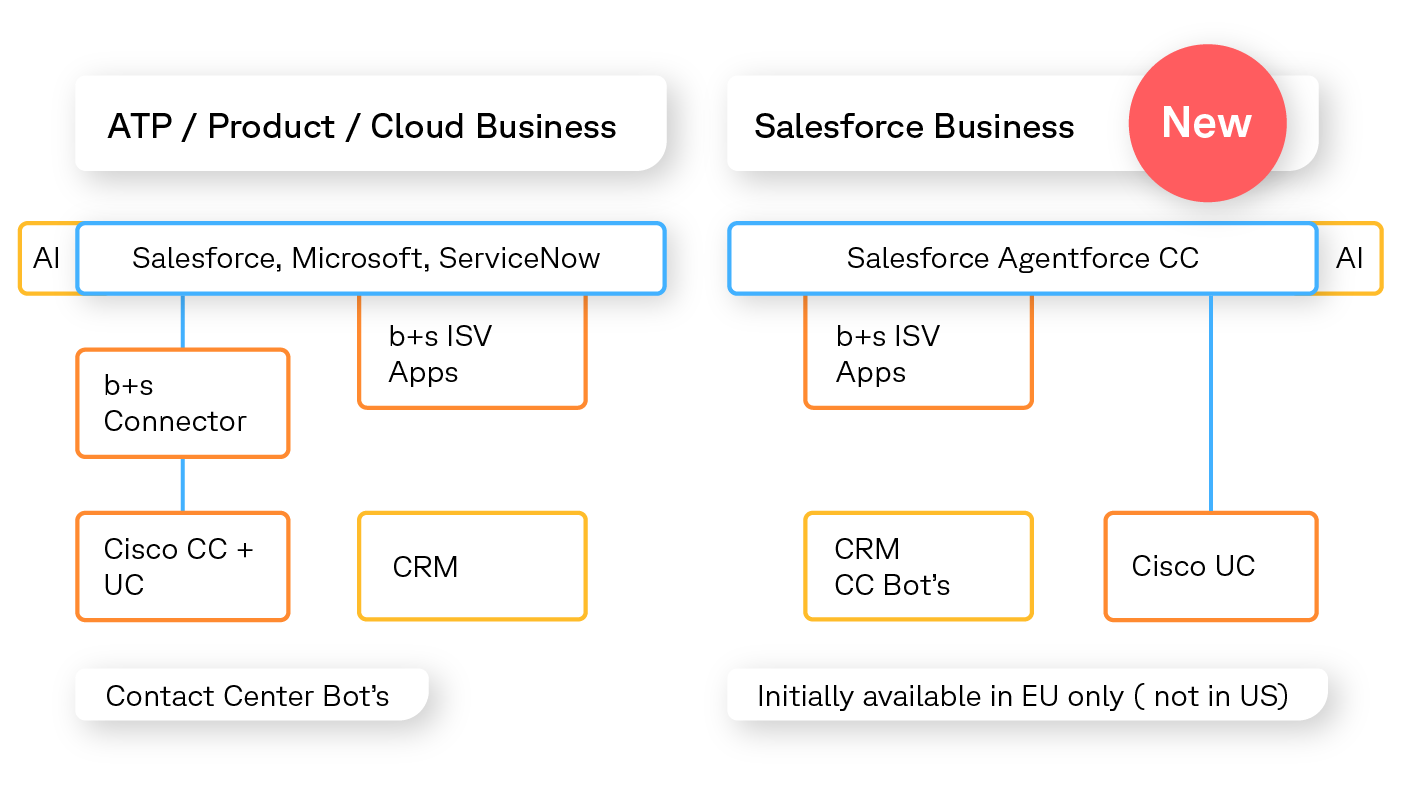
The platform is now generally available to Agentforce Service customers in the United States and Canada, with global availability on Salesforce’s public roadmap for later in 2026. The core proposition is that by treating voice, AI, and CRM as a single system rather than connected components, organizations can unlock agentic AI at a scale that fragmented architectures make difficult.
Salesforce’s EVP of Agentforce Service described the convergence this way: the customer demand for proactive, personalized service across every channel is pulling CRM and contact center infrastructure toward each other. Making that work, with AI and human agents genuinely collaborating rather than operating in parallel, depends on having a complete, shared view of every customer in a single system.
Genuine Strategic Tension as Opposed to a Simple Choice
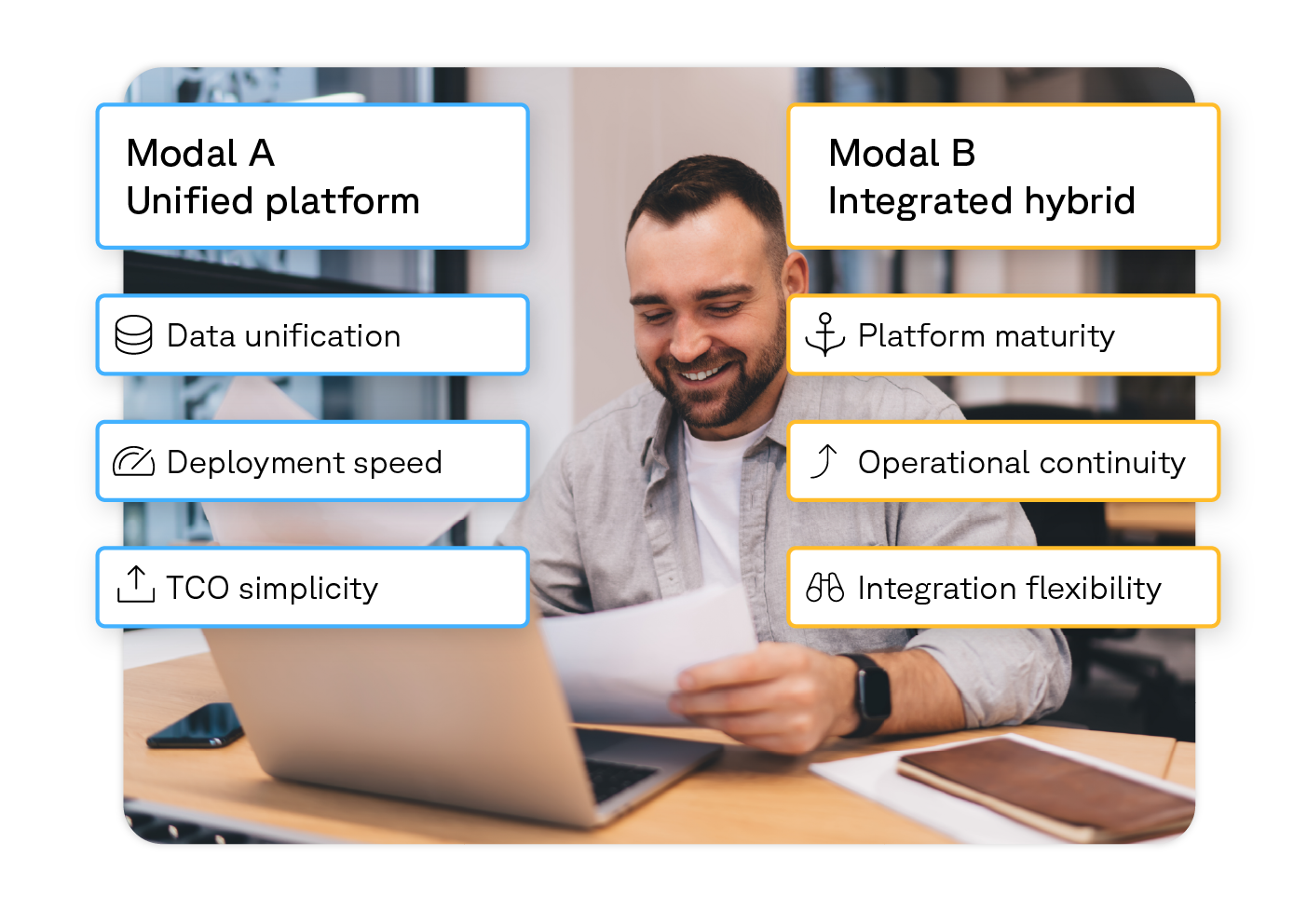
A unified foundation eliminates the synchronisation overhead that sits between separate systems. That matters considerably for real-time AI performance. The overhead of keeping disconnected systems aligned is a genuine operational cost if done independently. For organizations where that cost has been quietly accumulating across licensing, middleware, and engineering time, the total cost of ownership argument for a unified platform is worthwhile.
But enterprise contact center environments rarely resemble a clean whiteboard. Most organizations have built significant operational logic into their telephony infrastructure over years:
- Routing rules tuned to specific customer journeys
- IVR trees with embedded compliance requirements
- Workforce management integrations
- Quality assurance tooling
- Agent workflows that run deep into how contact center operations actually function day-to-day
Replacing or significantly restructuring any of this carries costs that don’t always surface in a licensing comparison.
The technical complexity of native voice is real, too. Telephony operates on fundamentally different principles than the asynchronous, text-based communication layers that modern SaaS platforms were built around, and delivering enterprise-grade voice natively involves solving problems that purpose-built telephony platforms have spent decades refining.
Salesforce is not suggesting this transition happens overnight. The company has been explicit that it will continue investing in its existing contact center partner relationships, and the GA announcement preserves the ability to bring your own telephony provider alongside the native offering. The market is being asked to consider a direction, rather than to choose in a single planning cycle.
Questions Worth Asking Before You Move
Rather than treating this as a binary platform decision, the more useful immediate exercise is diagnostic. Here are the questions that tend to separate organizations with a clear path forward from those making reactive moves.
What does your CRM data actually look like?
The unified platform argument often rests on the value of a single source of truth. But that value only materializes if your customer data is clean, structured, and reasonably complete. Organizations with fragmented data across legacy systems may find that moving to a unified CRM <> contact center architecture doesn’t resolve the underlying data problem. Understanding your data posture is a prerequisite for any credible evaluation.
What is your voice environment actually doing?
Voice is where enterprise complexity concentrates. It may include custom routing logic, compliance recording requirements, IVR trees, and workforce scheduling integrations. The true cost of migrating or replacing these components is rarely captured in a feature comparison. Mapping what your voice infrastructure carries, and what operational disruption a change would involve, is the work that needs to happen before any platform conversation.
What does your AI readiness look like in practice?
The agentic AI value proposition partially depends on autonomous resolution at scale (as well as assisting human agents in real-time). That is, AI that handles interactions from start to finish. Early Agentforce Contact Center deployments have reported voice containment rates in the forty to sixty percent range, with significant variation by industry, call complexity, and regulatory environment. Knowing where your current contact mix sits on that curve—and which interaction types are genuinely automatable today—should happen before any architecture decisions.
What is the true cost of your current integration model?
For contact centers running 150 seats, the annual cost of keeping CCaaS and CRM platforms synchronized can routinely exceed $200,000. That figure is central to the unified platform TCO argument. It is also the benchmark against which migration costs, operational disruption, and capability gaps should be honestly measured.
Is the platform ready for your operational requirements now?
Enterprise contact center operations tend to treat certain capabilities as non-negotiable: advanced workforce management, outbound dialing, quality management, and the compliance infrastructure that regulated industries require. Salesforce has publicly communicated a phased roadmap for delivering these capabilities through 2026, with global availability on Salesforce’s public roadmap for later in 2026. For organizations evaluating the platform today, understanding which requirements are met at GA and which are on the roadmap is not a minor consideration.
What This Means If You’re Running Cisco
For organizations operating on Cisco contact center infrastructure—Webex Contact Center, UCCE, or PCCE—this announcement lands in a specific context that’s worth separating from the broader market narrative.
Cisco remains one of the most widely deployed contact center platforms in enterprise environments globally, and its roadmap for AI integration continues to evolve. The arrival of Agentforce Contact Center doesn’t make that investment obsolete. What it does change is the nature of the planning conversation, particularly at renewal cycles and budget reviews where the architecture question is now explicitly on the table.
The more productive framing for Cisco-running organizations is not “do we move?” but “what does our integration model need to look like to remain competitive on AI performance?”
That is a solvable problem in the current environment. The path from Cisco infrastructure to Salesforce-native AI capabilities is a roadmap that organizations can navigate in stages, preserving what works while extending what doesn’t.
What Comes Next
The architecture question Salesforce has put on the table isn’t going away. The organizations that navigate this most effectively will be the ones that do the diagnostic work now, while there’s still space to think clearly, and before a renewal cycle or a competitive event forces the issue.
The honest answer to “which architecture is right for us?” is that it depends on factors that are specific to your environment, data, operational complexity, and AI readiness. Anyone offering a confident answer without that assessment hasn’t done the work.
At Bucher + Suter, we’ve spent years working with organizations navigating exactly this kind of inflection point. If you’re trying to work out what Agentforce Contact Center means for your Cisco environment specifically, we’re worth talking to.