


Every vendor has a pitch, every analyst a prediction. Every conference has a must-have innovation. It’s difficult to find a contact center leader who isn’t inundated with technology decisions daily.
The typical approach focuses on external factors like features and pricing, vendor reputation, and analyst rankings. Evaluation frameworks can only help so much. Too often, the questions that help prognosticate the success of a technology decision go unasked.
|
Martin Wüthrich has spent over 30 years in contact center technology. As CEO of Bucher + Suter, he’s led the company through every major shift, from on-premises to private cloud to the public cloud conversation. His framework for technology decisions isn’t about chasing what’s new. It’s about uncovering what is true. |
 |
Three questions that are simple to ask, but much harder to answer substantively.

1. Does It Serve the Customer?
When in doubt, start here.
“For decades, we’ve wanted only one thing from contact center solutions,” Wüthrich says, “namely to enable companies to serve their customers in the best possible way. Technologies, models, and deployment forms change, but the goal remains stable, and that’s exactly what every architecture decision should contribute to.”
It sounds obvious. But technology decisions are made for all kinds of reasons that have nothing to do with customers.
- AI because competitors have AI
- Cloud because everyone’s moving to cloud
- New platforms because the old ones feel dated
- Cost reduction mandates from finance
- Preferences from IT
- Pressure from vendors with quarterly targets to hit
None of these are inherently wrong. But they all obscure the central point.
Wüthrich’s framing is almost philosophical: the goal of contact center technology hasn’t changed in decades. Serve customers better. Everything else is packaging.
Before evaluating any technology, force the conversation back to customer outcomes:
- Will this reduce the effort customers spend to get help?
- Will this give agents what they need to resolve issues faster?
- Will this create a more seamless experience across channels?
If the answers are vague or speculative, the decision isn’t ready to be made.
Skipping this question carries inherent risk. Technology decisions made for internal reasons often backfire when they degrade the customer experience. Forrester predicts that by 2026, roughly one in three companies will damage their customer experience by rushing AI-powered self-service tools into production before they’re ready.
You don’t necessarily need the most modern stack. You need the one that serves customers best.

2. What Will It Look Like in 5 Years?
Can your organization really afford to devote 25% of engineering time and budget toward managing technical debt? Then avoid snapshot technology decisions.
- The “urgent” migration that didn’t account for where the market was heading.
- The platform chosen because it was hot in 2023 but showing its age by 2026.
- The architecture built for today’s requirements that can’t flex for tomorrow’s.
- Wüthrich’s antidote is a simple exercise – one that forces a longer view.
“Look at how the situation is today, how it was five years ago, and what can be deduced from this for the next five years. If you compare these three points, you will be able to identify trends much more clearly than if you focus solely on the ‘now.'”
Three points of comparison:

|
What was your architecture? What worked? What didn’t? What seemed like the future then? |
What’s changed? What drove those changes—strategy, necessity, or reaction? What assumptions proved wrong? |
Based on the trajectory, what’s likely? What’s uncertain? What flexibility will you need? |
The value isn’t in predicting the future perfectly. It’s in seeing patterns that point-in-time analysis misses. You’ll start to distinguish trends with staying power from noise that fades.
Think about it: five years ago, conversational AI meant clunky IVRs and chatbots that frustrated more than they helped. Today, large language models are reshaping what’s possible. Five years from now? The organizations making smart bets are the ones connecting those dots, instead of reacting to this quarter’s hype cycle.
Architecture should be built for durability.

3. Do You Have the People to Run It?
This may be the most important and most overlooked question. Technology options are always constrained by internal capabilities, whether the organization acknowledges it or not.
“Do you still have a data center?” Wüthrich asks. “Do you still have teams that can operate platforms, operating systems, and databases? Many companies have outsourced these skills and therefore understandably tend toward private or public cloud.”
Here’s the uncomfortable truth: many organizations have quietly lost the skills to run certain architectures. Years of outsourcing, attrition, and shifting IT priorities mean the teams who could manage on-premises infrastructure may no longer exist. The expertise walked out the door gradually (retirement, restructuring, etc.) and nobody noticed until it was gone.
That’s not a judgment. It’s a reality. And it should inform decisions rather than be ignored.
Before committing to any architecture, audit your actual capabilities:
- Do you have the teams to operate this solution, or will you be entirely dependent on vendors and partners?
- If you’re choosing cloud because you lack on-prem skills, is that a strategic decision or a forced one? There’s a difference.
- What happens if the vendor relationship changes and you need to pivot? Do you have options?
Choosing a technology that requires capabilities you don’t have (or pretending you have capabilities you’ve lost) leads to failed implementations, extended timelines, and dependency relationships you didn’t anticipate.
By now you’ve likely heard that 95% of GenAI pilots fail.
In Wüthrich’s words, Bucher + Suter stays “deliberately open-minded” across deployment models, implementing on-premises, private cloud, or public cloud depending on the situation. That flexibility only works because we’ve maintained the skills to support all three. Not every organization has that luxury anymore.
Know what you actually have. Then decide.

A Framework, Not a Formula
These three questions won’t make technology decisions easy. But they’ll make them honest.
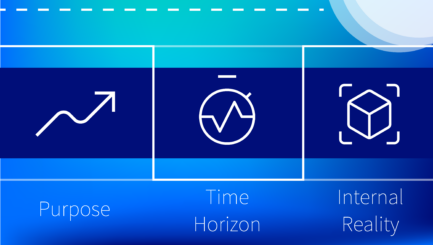
Start with why: does this serve customers?
Then look ahead: will this still make sense in five years?
Then look inward: do you have the people to make it work?
Technologies will keep changing. Vendors will keep pitching. The hype cycle will keep cycling. But decisions grounded in customer outcomes, long-term thinking, and organizational honesty tend to hold up, regardless of what’s trending.
The contact center industry loves to talk about transformation. New capabilities, platforms, and possibilities. That’s real. But transformation without foundation is just churn.
It’s time to ask the questions that really matter.
*All quotes from Martin Wüthrich, CEO of Bucher + Suter, in conversation with CMM360.